
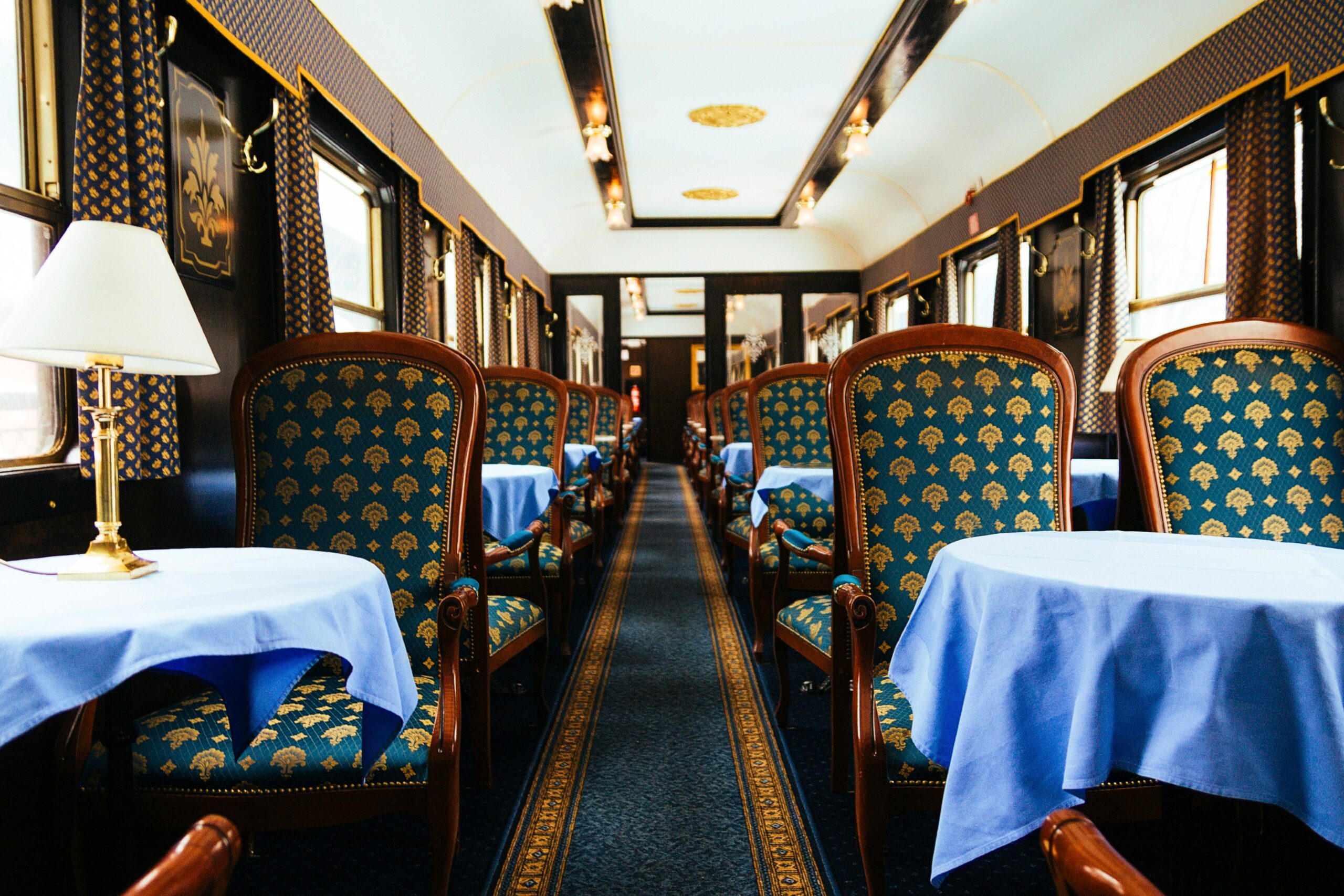
There was a time when the journey was as important as the destination. Before commercial aviation transformed international travel into a matter of schedules and connections, crossing a continent by train was an experience in itself. Days unfolded through changing landscapes, dining cars became places of conversation, and arrival carried a sense of occasion. The great railway journeys belonged to an era in which travel was measured not only in distance, but in the quality of time spent along the way.
For much of the twentieth century, that idea gradually gave way to speed. Air travel became the preferred language of international mobility, while railways were increasingly associated with practicality rather than prestige. Yet, as luxury travel enters another period of reinvention, the train is finding a different kind of relevance.
In 2027, the renewed attention surrounding some of the world’s most celebrated luxury trains suggests that the appeal of travel is shifting once again. The proposition is no longer simply to reach a destination efficiently. It is to experience the distance between places – to reclaim the journey as an essential part of the experience.
The appeal of travelling without rushing
The renewed interest in luxury rail travel is connected to a broader reassessment of what constitutes a meaningful journey. Contemporary luxury has become increasingly associated with privacy, personalisation and access, but these qualities do not necessarily require greater speed. In some cases, they demand the opposite.
A train creates a particular relationship with time. There is no airport security queue followed by a departure lounge, no compressed transition between cities and no need to organise every hour around reaching the next destination. Instead, the landscape becomes part of the experience. Mountains, coastlines, historic towns and remote regions pass gradually beyond the window, while the traveller occupies a world that moves at a different rhythm. This is the appeal of slow travel in its most considered form. It is not simply about taking longer to arrive. It is about making the time in between meaningful.
Luxury rail journeys offer something that even the most comfortable long-haul flight cannot replicate: a sense of continuity. The private cabin becomes a temporary residence, the dining car a social setting, and the observation lounge a place from which to experience the changing geography of an entire region. The train does not remove the journey from everyday life. It gives the journey its own world.
Three interpretations of the modern grand journey
The revival is not being shaped by a single operator or a uniform vision of luxury. Three names illustrate how differently the experience is being interpreted: Golden Eagle, L’Orient Express and the Venice Simplon-Orient-Express.
Each draws on the heritage of railway travel, but their propositions reveal a broader market in which the grand journey can mean exploration, historical restoration or the recreation of a particular European way of life.
Golden Eagle: The romance of distance
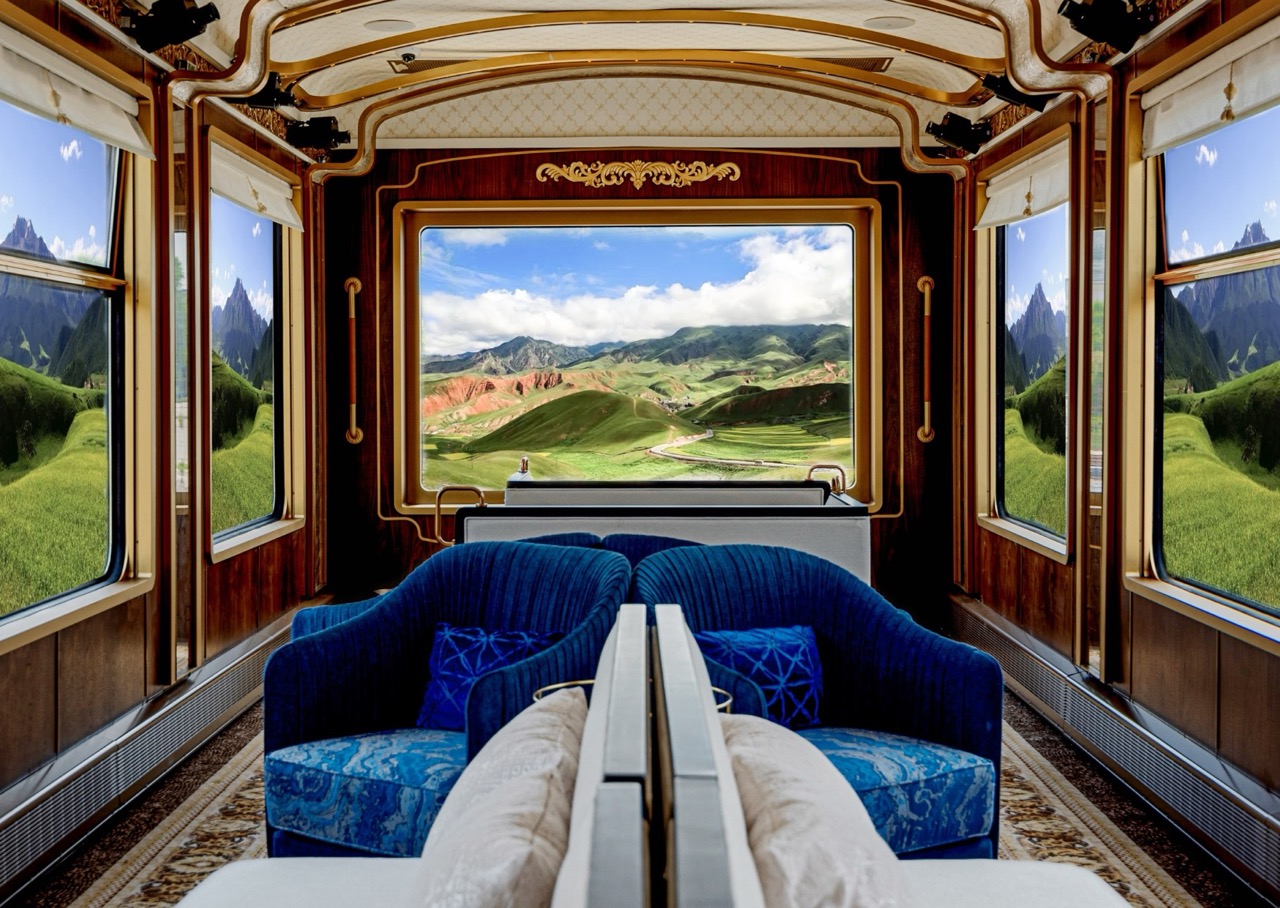
For travellers whose interest extends beyond the familiar European capitals, Golden Eagle represents the more exploratory side of luxury rail travel. Its journeys aboard the Golden Eagle Danube Express and Golden Eagle Silk Road Express connect destinations across Europe and Central Asia, often following routes that carry considerable historical and cultural significance. The itineraries are designed around more than the train itself, incorporating guided excursions, regional experiences and extended stays in places that are not always easily connected through conventional luxury travel.
The 2027 programme includes journeys along the Silk Road, with routes connecting destinations in Central Asia, including Almaty and Samarkand. Its broader collection also features European itineraries, from the Balkans to the Alpine regions. The distinction is important. Golden Eagle’s appeal is not exclusively rooted in nostalgia for the golden age of European railways. It is also about the possibility of crossing vast geographical and cultural territories without surrendering the comfort and service expected of a high-end journey. Here, the train becomes a means of discovery, a moving base from which to understand regions, histories and landscapes at a more deliberate pace.
L’Orient Express: Restoring a legend
Few names in travel carry the cultural weight of Orient Express. Its association with international glamour, Art Deco design, diplomacy and literary imagination has made it one of the most enduring symbols of railway travel.
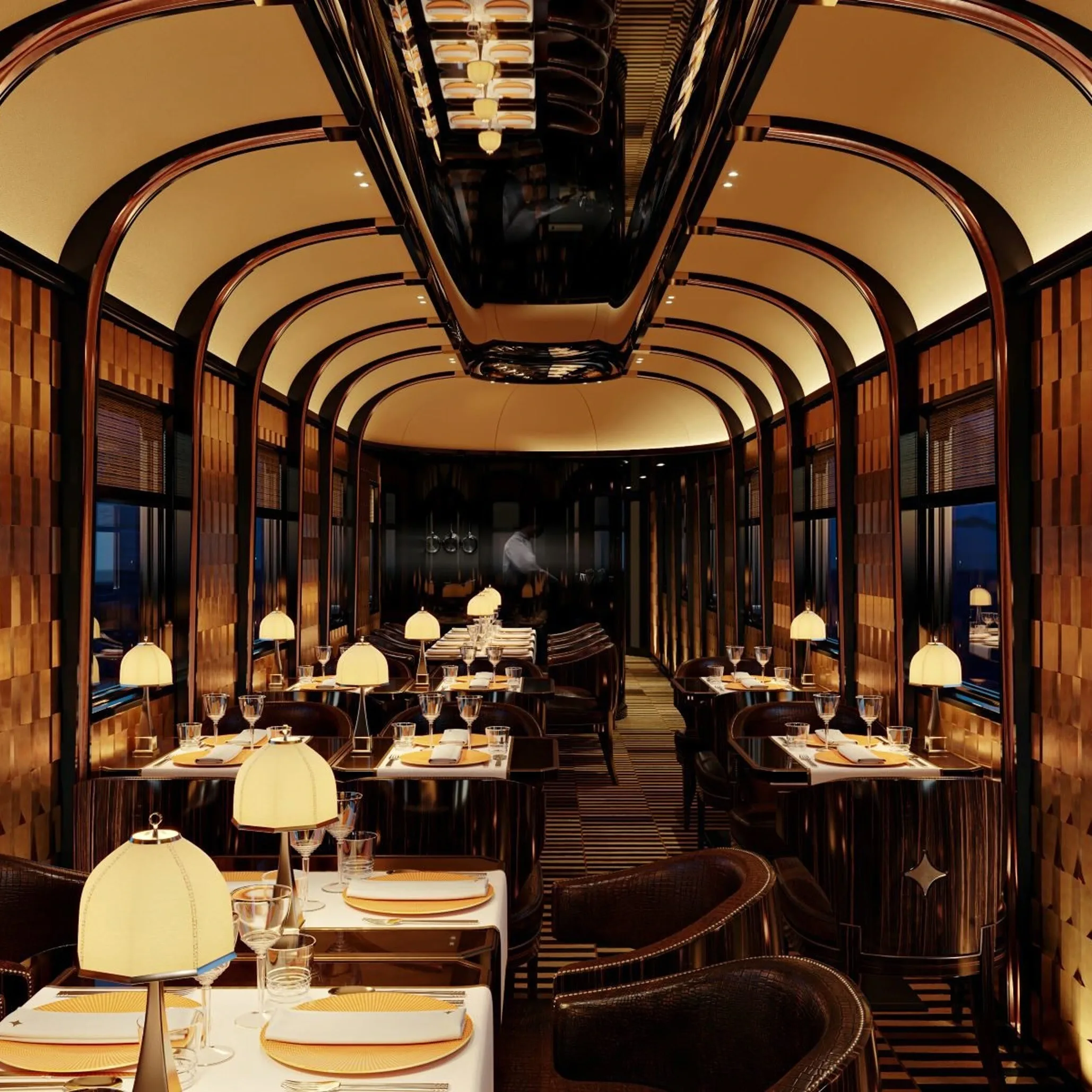
In 2027, Accor’s new L’Orient Express is expected to introduce another interpretation of that legacy. The project brings together 17 original carriages dating from the 1920s and 1930s, formerly associated with the Nostalgie-Istanbul-Orient-Express. Reimagined under the direction of architect Maxime d’Angeac, the interiors draw on the decorative vocabulary of the original era while introducing a contemporary interpretation of onboard luxury. The ambition is not simply to recreate a historic train. It is to restore the atmosphere and imagination attached to the name, translating them into an experience suited to a new generation of travellers.
There is a particular significance in this approach. In an industry where luxury properties and experiences increasingly compete through novelty, the restoration of something genuinely historic offers a different kind of distinction. Its value lies partly in the material past, in original carriages, craftsmanship and design references that cannot be manufactured convincingly from scratch. L’Orient Express is therefore selling more than a journey. It is offering access to a carefully reconstructed chapter of travel history.
Venice Simplon-Orient-Express: The art of arrival
If Golden Eagle represents exploration and L’Orient Express the restoration of a legend, the Venice Simplon-Orient-Express occupies a distinctive position in the contemporary imagination of European luxury.
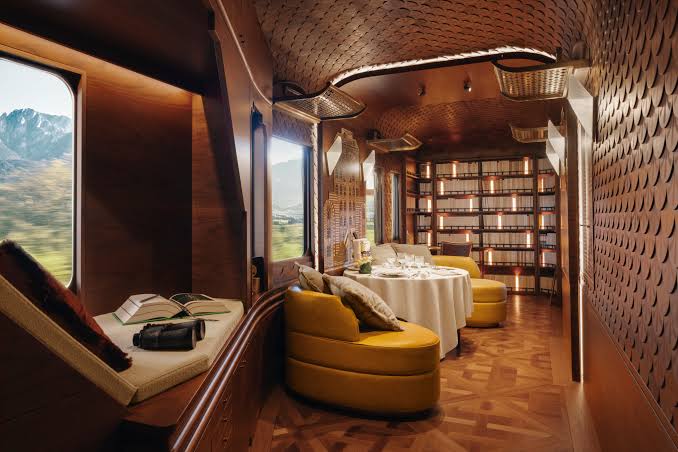
Operated by Belmond, the train has become one of the most recognisable expressions of the grand railway journey. Its restored Art Deco carriages, formal dining, attentive service and carefully considered itineraries turn travel into an occasion. Its 2027 programme continues this approach with the introduction of a Paris-to-Monte Carlo journey on 10 May. Following the Côte d’Azur, the route brings the train to Monaco for the first time as part of its regular itinerary. The journey connects two destinations whose histories have long been associated with European glamour, while making the railway experience itself the central attraction.
The wider Villeggiatura by Train programme also links the Venice Simplon-Orient-Express with Belmond properties in Italy, including Hotel Cipriani in Venice, Villa San Michele in Florence, Splendido in Portofino and Caruso on the Amalfi Coast. This is an especially interesting development because it extends the railway experience beyond the carriage. The journey becomes part of a larger hospitality concept, connecting the romance of the train with the established identity of exceptional hotels. The result is not simply a luxury transfer between destinations. It is a more complete interpretation of the grand European holiday.
Nostalgia, but not a return to the past
The emotional power of luxury trains is inseparable from nostalgia. Their visual language – polished wood, brass details, intimate compartments, restaurant cars and the ritual of dressing for dinner – evokes an era when travelling was associated with ceremony and anticipation. Yet nostalgia alone would not sustain a meaningful revival.
Today’s travellers are not necessarily seeking to recreate the past in its entirety. They are responding to qualities that seem increasingly scarce in contemporary life: uninterrupted time, a sense of occasion, human interaction and the pleasure of being temporarily removed from the demands of constant connectivity. There is also a renewed appreciation for craftsmanship and permanence. A restored carriage with original decorative elements offers a different relationship with design from an entirely new luxury interior. Its character comes not only from the materials used, but from the history embedded within them. This is where the modern luxury train finds its strongest cultural proposition. It takes the romance of another era and gives it a contemporary purpose.
The commercial future of slow luxury
The expansion of luxury rail also points towards an interesting development in the wider hospitality industry. The most compelling experiences are increasingly those that connect several parts of the luxury ecosystem rather than operating as isolated products. A train journey can incorporate accommodation, gastronomy, cultural excursions, private transfers and stays at established hotels. It creates opportunities for partnerships between railway operators, hospitality brands, destinations and local experience providers.
For operators, this offers a way to build a more comprehensive travel proposition. For hotels, it provides access to guests who are already inclined towards considered, high-value travel. For destinations, it creates an opportunity to become part of a journey rather than simply another stop on an itinerary. The economics, however, are deliberately exclusive. These journeys require substantial investment in rolling stock, restoration, staffing, maintenance and carefully coordinated operations. Limited capacity and high operating costs mean that luxury rail will remain a relatively small segment of the wider travel market.
Nor should its environmental credentials be accepted without scrutiny. Rail can offer lower emissions than flying on many routes, but the full impact of a luxury journey depends on the energy used, the train’s occupancy, its operating model and the additional transport required. The strongest argument for these experiences is not an automatic claim of sustainability, but a different philosophy of travel. Their value lies in the experience they create and the time they allow travellers to reclaim.
The journey becomes the destination
The renewed interest in luxury trains tells us something about the direction of high-end travel. After years in which speed, convenience and the accumulation of destinations often defined the experience, there is growing room for a different kind of aspiration. It is not necessarily about travelling further, staying in the most expensive suite or visiting another celebrated destination. It is about choosing an experience that cannot be reduced to an arrival time.
Golden Eagle offers the scale of exploration. L’Orient Express brings the weight of history and design. The Venice Simplon-Orient-Express preserves the theatre of European railway travel while connecting it with contemporary hospitality. Their approaches are different, but they share an understanding that luxury can exist in the time between two places. Perhaps that is the real significance of the grand railway journey in 2027. In a world where almost everything is designed to happen faster, the ability to slow down – and to enjoy every mile – is becoming a privilege in itself.
Photo: Unsplash.com/Elimende Inagella/goldeneagleluxurytrains.com/orient-express.com/belmond.com
