
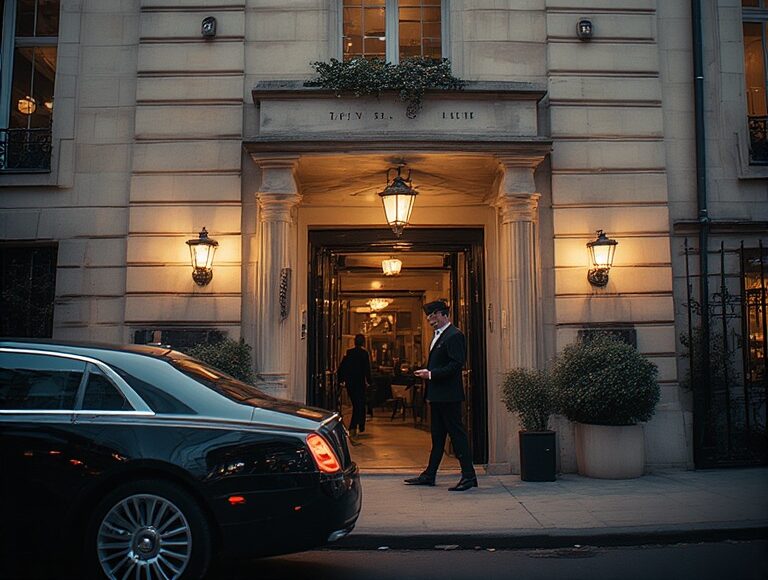
For much of the past thirty years, luxury hotels were the unofficial meeting spots of international life. Business relationships formed in discreet lounges. Family offices returned to the same suites season after season. The hotel lobby served as a stage for visibility, relevance, and access. In 2026, that model feels worn out.
The problem is not quality. The world’s top hotels remain operationally excellent. The issue is exposure. As luxury hospitality became more focused on scale, social media visibility, and discoverability through algorithms, many properties lost the very thing that sophisticated travelers value most: a controlled atmosphere. For wealthy individuals who travel globally, privacy is about more than just space. It’s also about social interaction.
This shift helps explain the quick rise of private members’ clubs across Europe. These clubs are not just nightlife venues or networking spaces. They serve as hybrid environments where hospitality, work, wellness, and social connections blend into a single, well-designed ecosystem. They are increasingly becoming the preferred headquarters for sophisticated international life.
The Rise of Hybrid Hospitality
One significant change in hospitality is the emergence of what operators call “hybrid hospitality.” This model combines ultra-luxury accommodation with semi-private membership systems. In cities like London, Paris, Milan, and Zurich, historic buildings are transforming into members-only houses that act as residences, workspaces, wellness centers, and private social networks all at once. Unlike traditional luxury hotels, these properties focus on continuity instead of constant turnover.
The modern members’ club is based on a fundamentally different idea. Hotels revolve around occupancy cycles, with constant arrivals and departures. Clubs, on the other hand, are designed around familiar behaviors. Members come back not only for the service quality but because the social setting itself becomes predictable, filtered, and emotionally supportive. This means fewer introductions, less pressure to perform, and a stronger sense of trust.
From Visibility to Filtration
Today’s affluent travelers face a world filled with overstimulation: crowded luxury spots, highly visible restaurants, performative social spaces, and a constant digital audience. In response, those with sophisticated wealth are making subtle but firm changes. They are having fewer public dinners, forming smaller circles, staying longer, and seeking more selective environments. Private clubs address this change by filtering rather than creating spectacle. The goal is not exclusivity as a performance, but exclusivity as a way to manage the environment. That’s why many new clubs are avoiding the overt social signaling of earlier generations. The atmosphere tends to be quieter, more like a home, and often difficult to categorize.
In Paris, the rising “Work Palace” model shows this change. Historic buildings are being reimagined as curated members-only spaces that include private offices, guest suites, wellness areas, and dining experiences under one operational identity.
Wellness has also become part of the social infrastructure. Six Senses London, set to open in 2026, will incorporate its Six Senses Place concept directly into the property, featuring biohacking lounges, magnesium pools, co-working areas, and private social spaces in one ecosystem. The aim is not indulgence but regulation.
The Post-Soho House Era
The growth of established brands like Soho House into new markets, such as Milan where they will open a property in the former Cinema Arti building in 2026, has spurred the rise of more independent club concepts. These newer clubs describe themselves less as hospitality brands and more as curated communities.
In London, the focus is shifting with concepts like St Clement, which caters to creative and entrepreneurial residents through long-stay loft apartments, intimate cultural programming, and low-visibility social structures. Similarly, clubs like The 1930 Club and CORE Milan emphasize intellectual and cultural connections just as much as hospitality. The language surrounding these projects leans towards themes of ethical humanism, cultural exchange, and long-term community rather than nightlife or status visibility. This change is noteworthy. Luxury hospitality is shifting away from consumption-driven experiences toward socially conscious ecosystems.
Clubs as Operational Infrastructure
For globally mobile wealth, these clubs increasingly act as decentralized headquarters. This is especially relevant for entrepreneurs, investors, and family office leaders who no longer stick to a single geographic base. The need for a traditional corporate office decreases when business can happen fluidly between cities, homes, yachts, and seasonal hubs. In response, many clubs are embedding operational infrastructure into their models: secure meeting spaces, private work areas, signal-blocking suites, digital detox zones, wellness check-ups, and private banking connections.
In Vienna and Zurich, projects like Am Hof 8 and Fairclough Palmer are emerging almost as extensions of the European private wealth system, where hospitality, deal-making, and financial networks blend together. This marks a significant change in how we understand luxury hospitality. The property is no longer just a place to stay; it becomes a controlled environment for lives that span multiple locations.
The Adriatic Context
In the Adriatic region, this evolution is still developing, which could work to its advantage. Traditionally, the area’s luxury scene has focused on seasonality, yachting, and destination hospitality. However, the fragmented geography of the Adriatic naturally supports smaller, lower-density social networks that align with current luxury trends. The islands offer controlled access without fake exclusivity. Marina culture already acts as a semi-private network that repeats. Distances remain manageable yet provide a sense of separation. Most importantly, the region still holds a unique character.
Unlike fully optimized luxury coastlines, certain parts of the Adriatic maintain a sense of incompleteness, socially, architecturally, and operationally. For well-traveled individuals who are increasingly worn out by standardized luxury experiences, this sense of being unfinished can feel surprisingly appealing. Not every environment benefits from perfect optimization.
A Different Form of Status
The traditional signs of luxury are still present: architecture, craftsmanship, location, service. But underneath, a subtler hierarchy is forming. In 2026, status comes more from access to environments that feel emotionally controlled – spaces where privacy is built in instead of something requested. Places where recognition matters more than performance, and where hospitality serves as continuity rather than a show.
Private members’ clubs are gaining relevance again because they align with a broader cultural movement away from visibility and toward filtration. For some, luxury still means being seen. For others, it increasingly means knowing exactly where they can slip away, and who will already be there when they arrive.
