
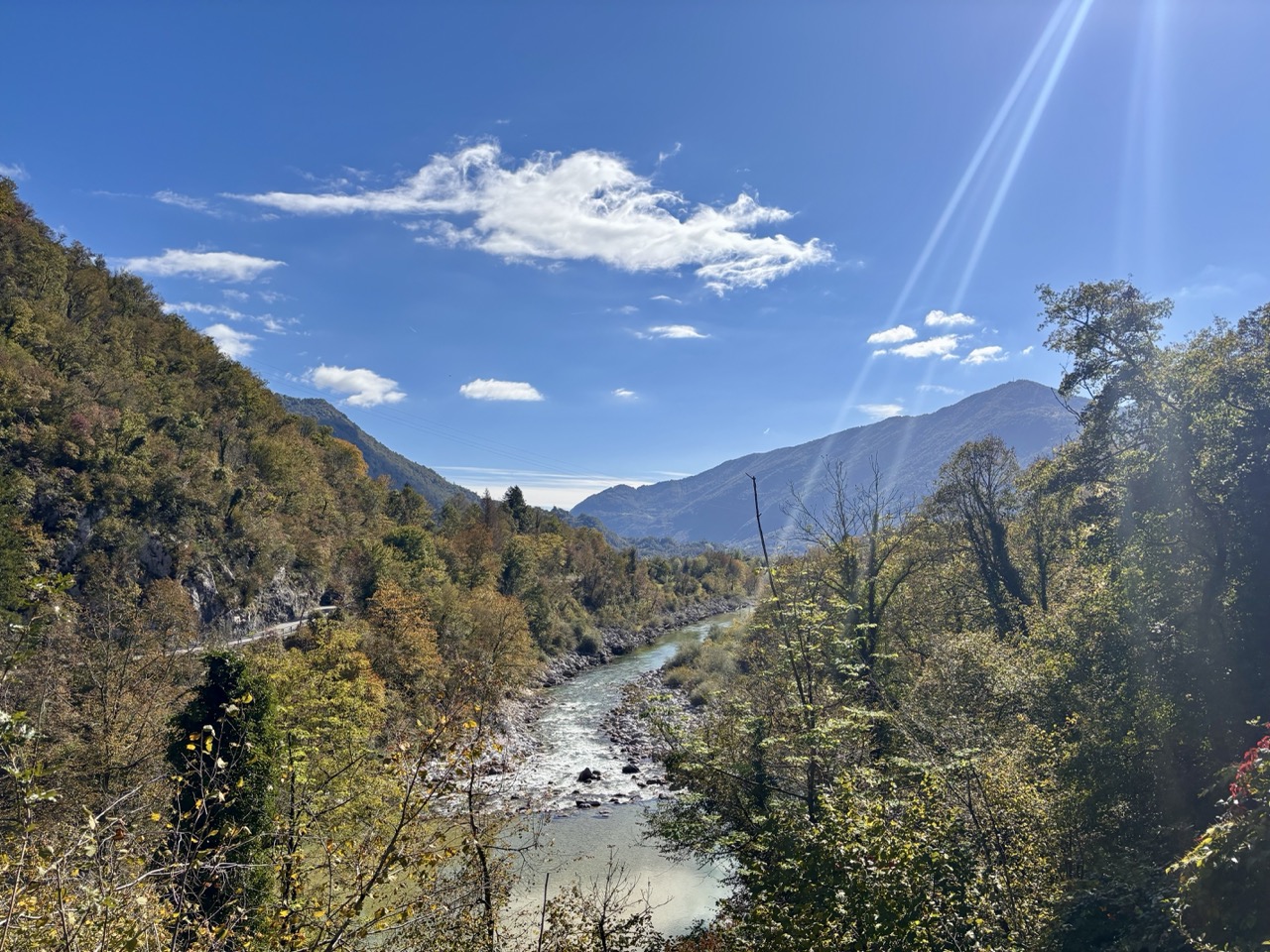
There are landscapes whose beauty is immediately apparent. The Soča Valley, in western Slovenia, is one of them. The emerald river cuts through the Julian Alps, passing limestone gorges, forested slopes and small settlements that seem to have developed in conversation with the mountains around them.
For many visitors, the attraction is straightforward: spectacular scenery, clear mountain water and an extraordinary range of outdoor experiences. Kayaking, rafting, hiking and cycling have made the region one of Europe’s more compelling destinations for active travel. But the Soča Valley has another identity, one that becomes apparent when the journey moves beyond the riverbanks.
This is a landscape shaped not only by water and geology, but also by European history. During the First World War, the mountains became the setting for some of the most difficult fighting of the Isonzo Front. More than a century later, remnants of that conflict remain part of the landscape, creating an unusual contrast between the natural beauty that attracts visitors today and the human suffering that once marked the region.
It is this combination that makes the Soča Valley particularly interesting. It is not simply an Alpine destination for outdoor pursuits, nor a place to visit for its historical monuments alone. It is a region where nature, memory, food and contemporary mountain life exist within a relatively small geographical area.
A river that defines a region
The Soča begins in the Julian Alps, near Trenta, and travels approximately 137 kilometres towards the Adriatic Sea. Its distinctive emerald colour has become one of Slovenia’s most recognisable natural signatures. Yet the river is more than a visual attraction. It has shaped the geography, economy and identity of the valley, creating the conditions for a particular relationship between people and their surroundings.
In its upper reaches, the water moves through narrow gorges and rocky passages, with rapids that have made the river internationally known among kayaking and rafting enthusiasts. Further along, calmer stretches and pools offer a different experience, inviting visitors to slow down and appreciate the landscape from the riverbank.
The river also supports a rich natural environment, including the marble trout, an important native species that has become closely associated with the region. For travellers, the appeal lies in the variety of ways to experience the same landscape. A day can begin with a walk beside the water, continue with a guided adventure on the river and end at a restaurant where local ingredients provide a connection to the surrounding countryside. The Soča does not require a single way of being experienced, its character changes with the pace and perspective of the visitor.
Javorca: Architecture as a memorial
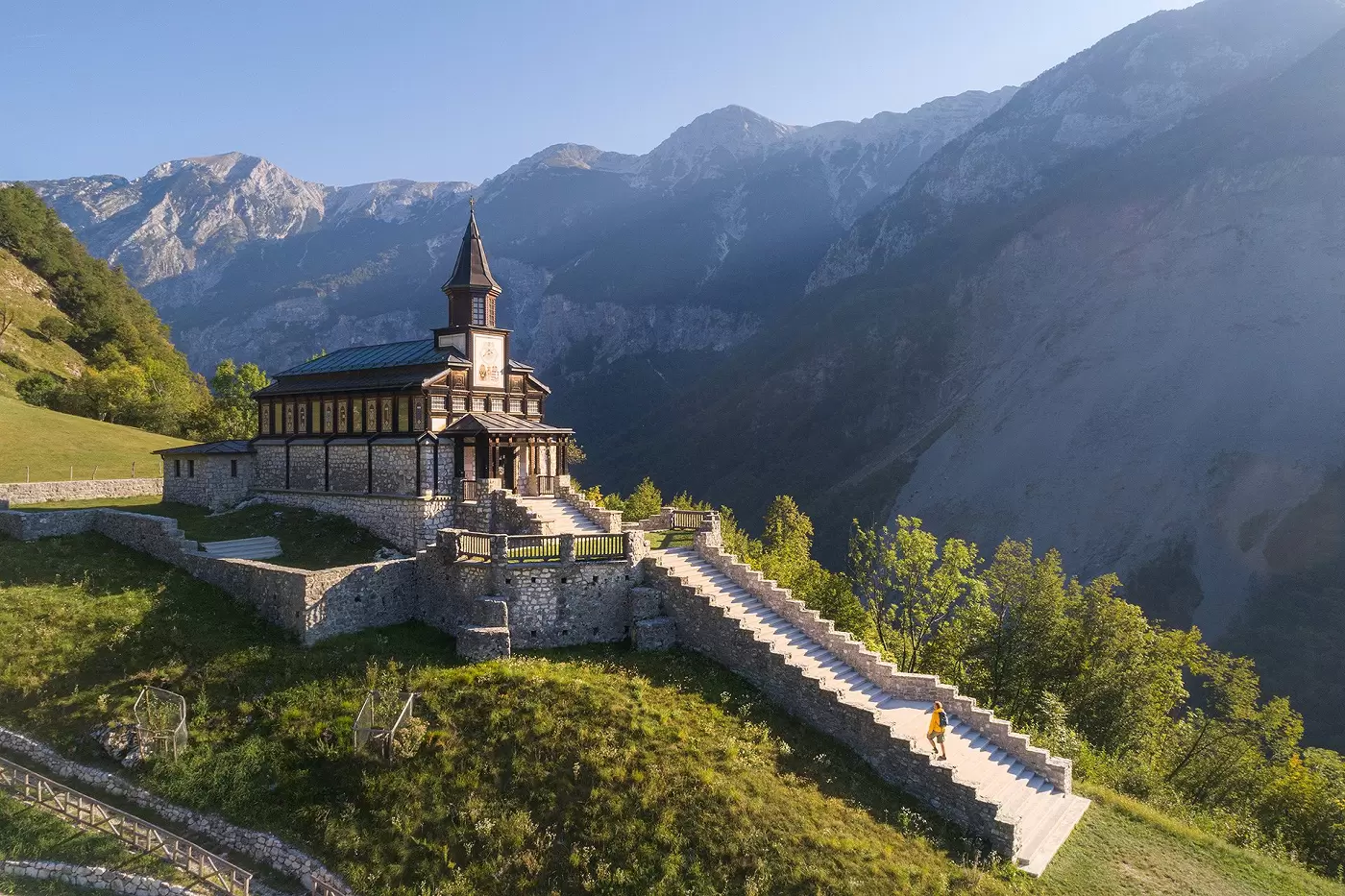
High above the Tolminka Valley stands one of the region’s most remarkable historical buildings: the Memorial Church of the Holy Spirit at Javorca. Constructed in 1916 by Austro-Hungarian soldiers in memory of their fallen comrades, the small wooden church is an extraordinary example of craftsmanship created under wartime conditions.
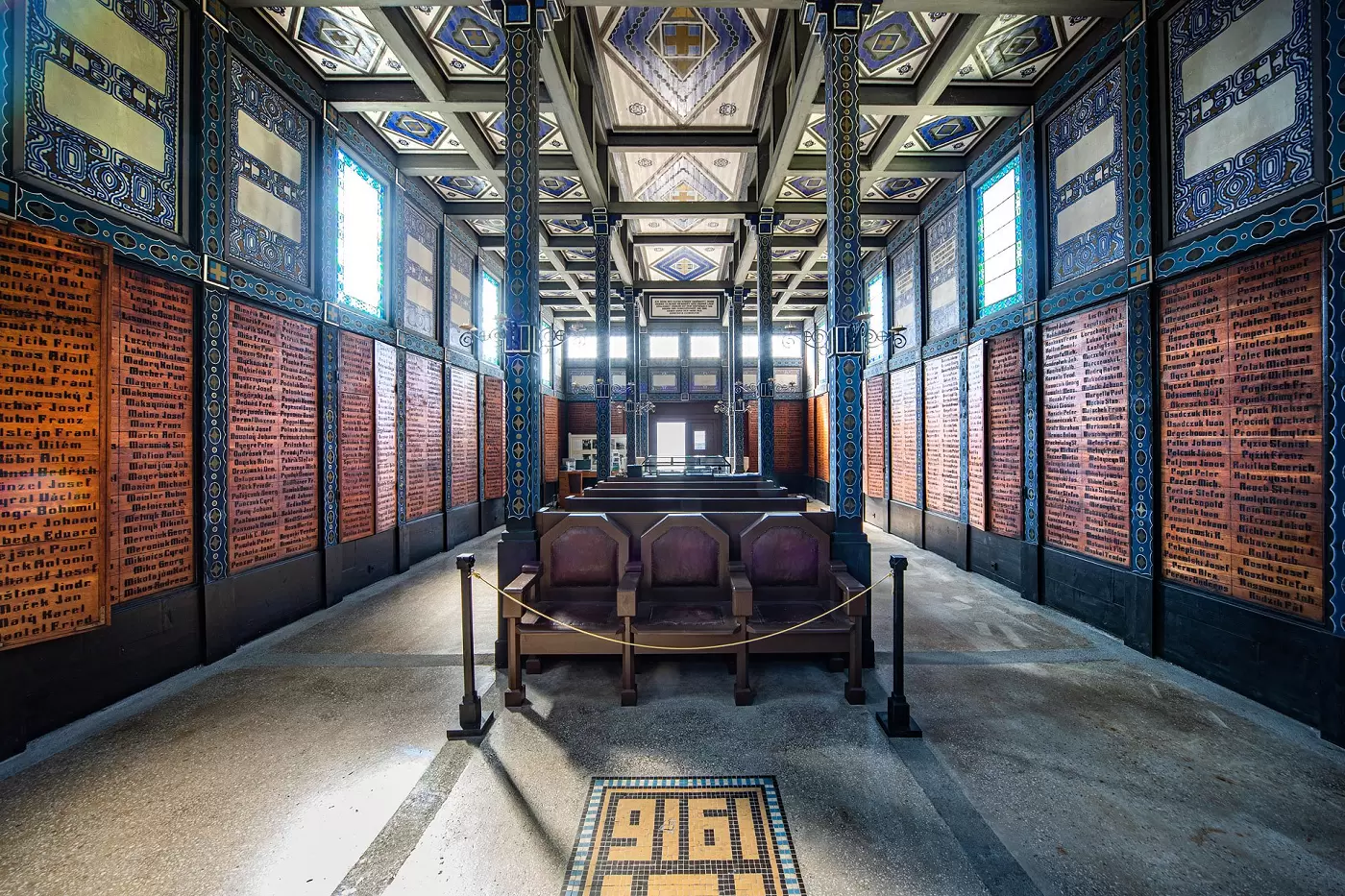
Its architecture is particularly moving because of the circumstances in which it was built. Designed by the Viennese artist Remigius Geyling, it combines elements of the Secession style with the traditions of a memorial building. Inside, oak panels carry the names of 2,564 fallen Austro-Hungarian soldiers, transforming the interior into a permanent record of individual lives. There is something remarkable about encountering such a carefully considered work of architecture in this remote mountain setting.
Javorca is not a grand monument designed to dominate its surroundings. Its scale, materials and position create a quieter relationship with the landscape. The building asks visitors to pause rather than simply admire it. Today, it forms part of the Walk of Peace and holds the European Heritage Label. Its significance extends beyond the military history it commemorates: it has become a symbol of remembrance and reconciliation in a region once divided by conflict. For anyone exploring the Soča Valley, it offers an experience quite different from the more familiar attractions along the river.
A region best understood through its food
The identity of the Soča Valley is also expressed through its culinary traditions. The region’s cuisine reflects its geographical position between the Alpine world and the Mediterranean influences further west. Mountain dairy products, local cheeses, seasonal ingredients, freshwater fish, herbs and traditional dishes provide a culinary vocabulary that belongs distinctly to this part of Slovenia. What makes the region interesting, however, is not limited to fine dining. Small inns, family-run restaurants and local producers offer a more informal understanding of the valley’s food culture. The Bovec and Tolmin cheeses, traditional dishes and products from mountain farms are reminders that gastronomy here remains connected to everyday life and the surrounding agricultural landscape.
For the international traveller, this creates an opportunity to experience different expressions of the same regional identity: an ambitious tasting menu one evening, a simple local dish the next. The distinction is important. A destination’s culinary character is not defined by its most celebrated restaurant alone, but by the wider network of producers, traditions and people who give its food a sense of place.
The appeal of the in-between places
The most recognisable attractions of the Soča Valley are easy to identify. The river, the gorges, the waterfalls and the mountain viewpoints provide the dramatic scenery that has made the region increasingly visible internationally. But some of its most interesting moments happen away from these established stops. The smaller settlements between Tolmin, Kobarid and Bovec reveal another side of the valley. Here, the landscape is encountered through everyday architecture, agricultural land, quiet roads and houses that remain closely connected to the terrain.
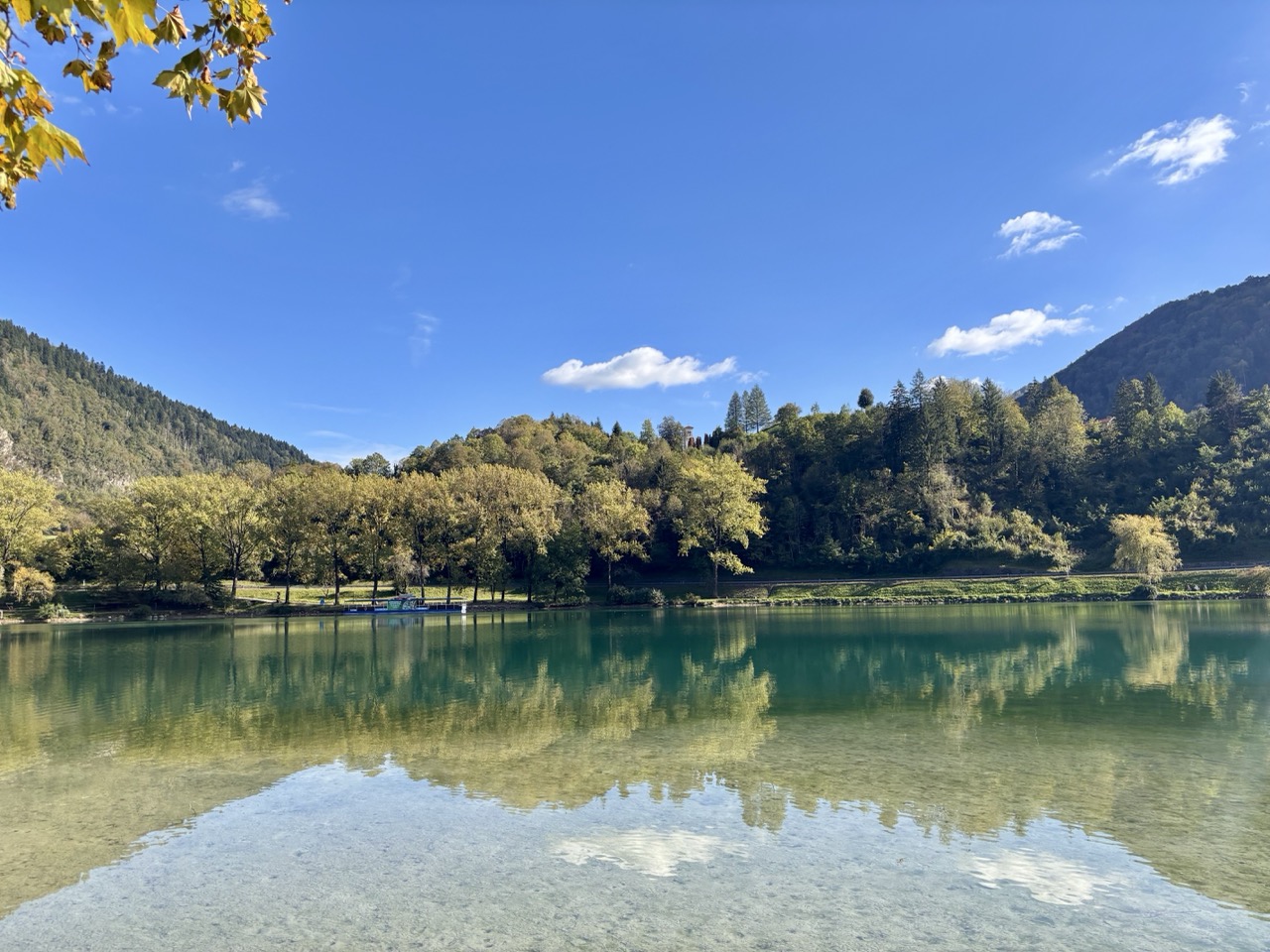
Most na Soči, with its calm waters and hillside setting, offers a particularly different atmosphere from the more dramatic upper reaches of the river. It is a place where the experience of the valley becomes less about movement and more about observation. This is also where accommodation can influence the character of a stay. The Soča Valley rewards exploration, but it also rewards the decision to stay in one place a little longer.
An Alpine destination with a wider perspective
The Soča Valley is sometimes introduced through the language of adventure tourism, and understandably so. Its river, mountain trails and dramatic terrain provide an exceptional setting for outdoor experiences. Yet defining the region through adrenaline alone would overlook much of what gives it character. Its history connects it to a wider European story. Its food reflects the meeting of Alpine and Mediterranean traditions. Its architecture preserves the memory of a difficult past, while contemporary accommodation and gastronomy demonstrate how the region continues to evolve.
There is also an important question of preservation. The very qualities that make the valley attractive, its clean water, natural diversity and relatively small settlements, require careful management as visitor numbers grow. Initiatives such as timed entry at Tolmin Gorges and shuttle services to popular sites demonstrate how the destination is attempting to balance access with the protection of its environment. For the modern traveller, this is part of the appeal. The most rewarding destinations are not necessarily those offering the greatest number of attractions, but those with enough depth to remain interesting after the first impression has passed. The Soča Valley has that depth.
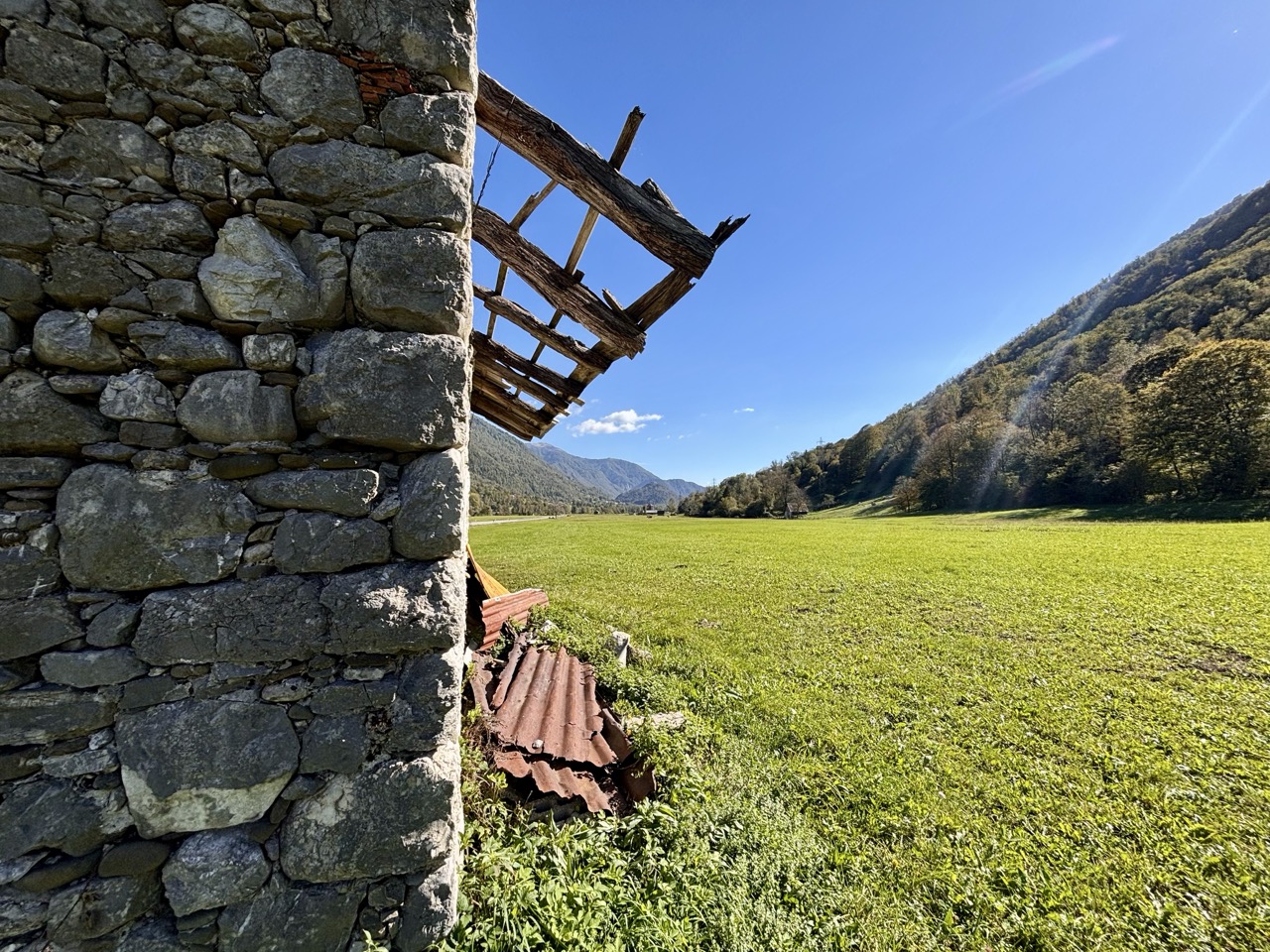
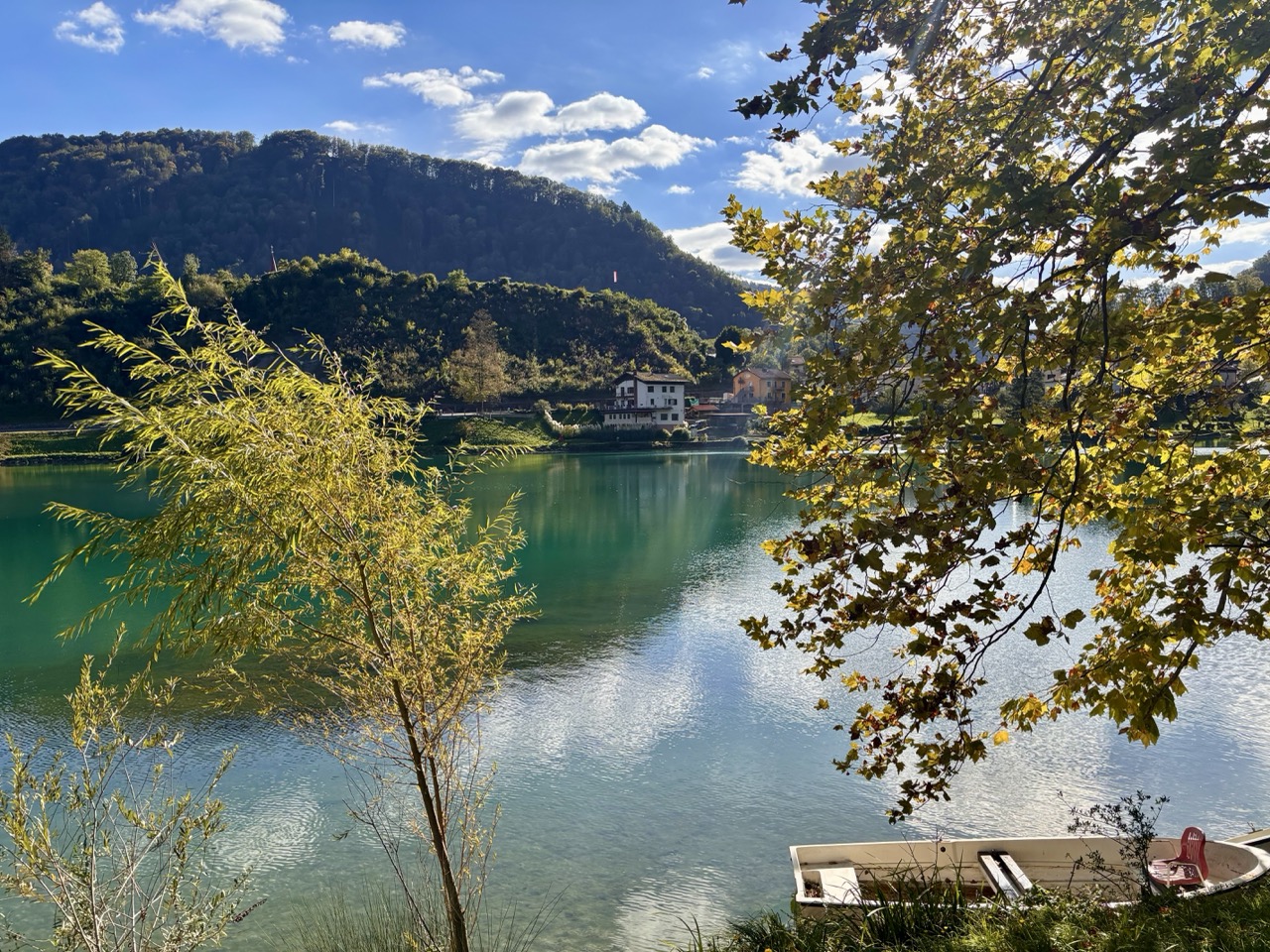
Its emerald waters may be the reason to arrive, but they are only the beginning of a more complex experience. There are mountains that preserve the memory of a European conflict, architecture that speaks of craftsmanship and reconciliation, tables that express the character of the region and small communities whose connection to the landscape remains visible in everyday life. Perhaps the best way to understand the Soča Valley is not to think of it as an Alpine adventure destination, a historical region or a culinary escape. It is all three, held together by the same landscape. And that is what makes it worth discovering beyond the photographs.
*Article is made in collaboration with Soča Valley Tourist Board/Sponsored article
Source and photos: soca-valley.com
Video: Bespoke
