
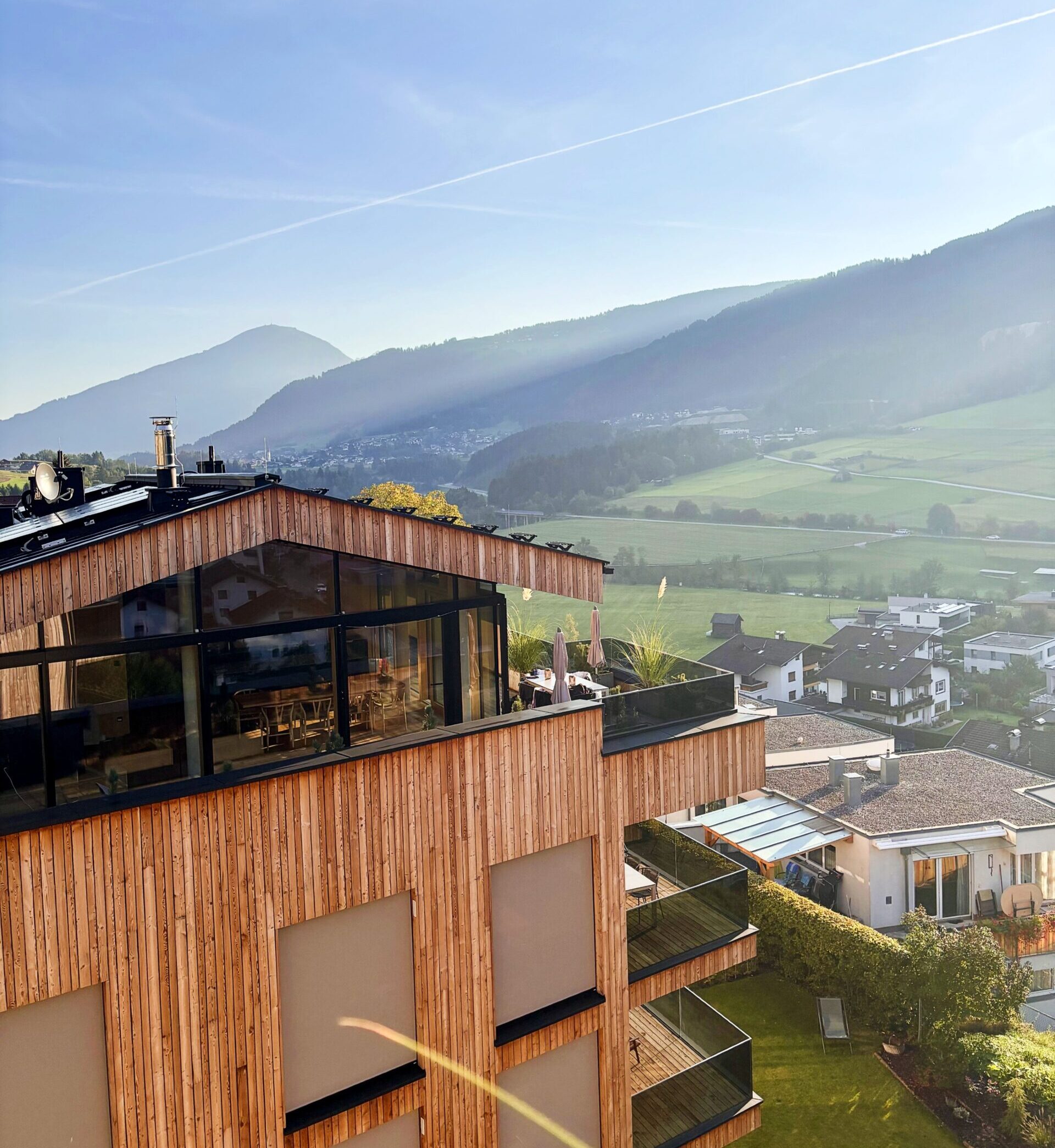
In contemporary luxury hospitality, a great deal of attention is paid to what happens inside a hotel. The architecture, the furniture, the lighting, the choice of stone, the quality of the textiles. Every detail contributes to the atmosphere a property wants to create. But what if the story began somewhere else entirely?
At Lärchenlodge, in Austria’s Stubai Valley, the starting point was not a mood board or a particular architectural style, it was a forest belonging to the family behind the property, a landscape that had been part of its history for generations. The larch growing there would eventually become the timber used across the building, from its exterior to its handmade furniture. The wood was processed at a small sawmill in the valley before being crafted by artisans in South Tyrol.
The result is a contemporary Alpine retreat with 13 apartments, panoramic windows and a rooftop spa, but its most interesting quality is not any single amenity. It is the continuity between the material, the people who worked with it and the place in which the building stands. In an industry increasingly skilled at manufacturing a sense of authenticity, Lärchenlodge offers a more tangible proposition: a hotel whose identity can be traced back to its source.
The difference between using wood and knowing where it came from
Natural materials have become almost obligatory in contemporary luxury interiors. Timber, stone, linen and textured plaster appear across hotels that want to communicate calm, permanence and a connection to nature. Yet the presence of natural materials does not automatically create a meaningful relationship with a place. Wood can be selected because its colour complements the furniture, stone can be chosen because it photographs beautifully. A local reference can be introduced through a decorative object or a carefully curated collection of artworks. At Lärchenlodge, the relationship is more direct. The larch is not simply a material chosen to suggest an Alpine atmosphere, its origin is part of the property’s own story. It moves from the family forest through local processing and skilled craftsmanship into the finished building and that distinction changes the way the interior is understood. The timber is no longer an aesthetic layer applied to a completed architectural concept, it connects the property to a particular landscape, a family history and a chain of human work. This is an increasingly relevant distinction for luxury hospitality. As premium interiors become more polished and globally recognisable, provenance can offer something that expensive finishes alone cannot: a reason for a place to look the way it does.
A contemporary Alpine language
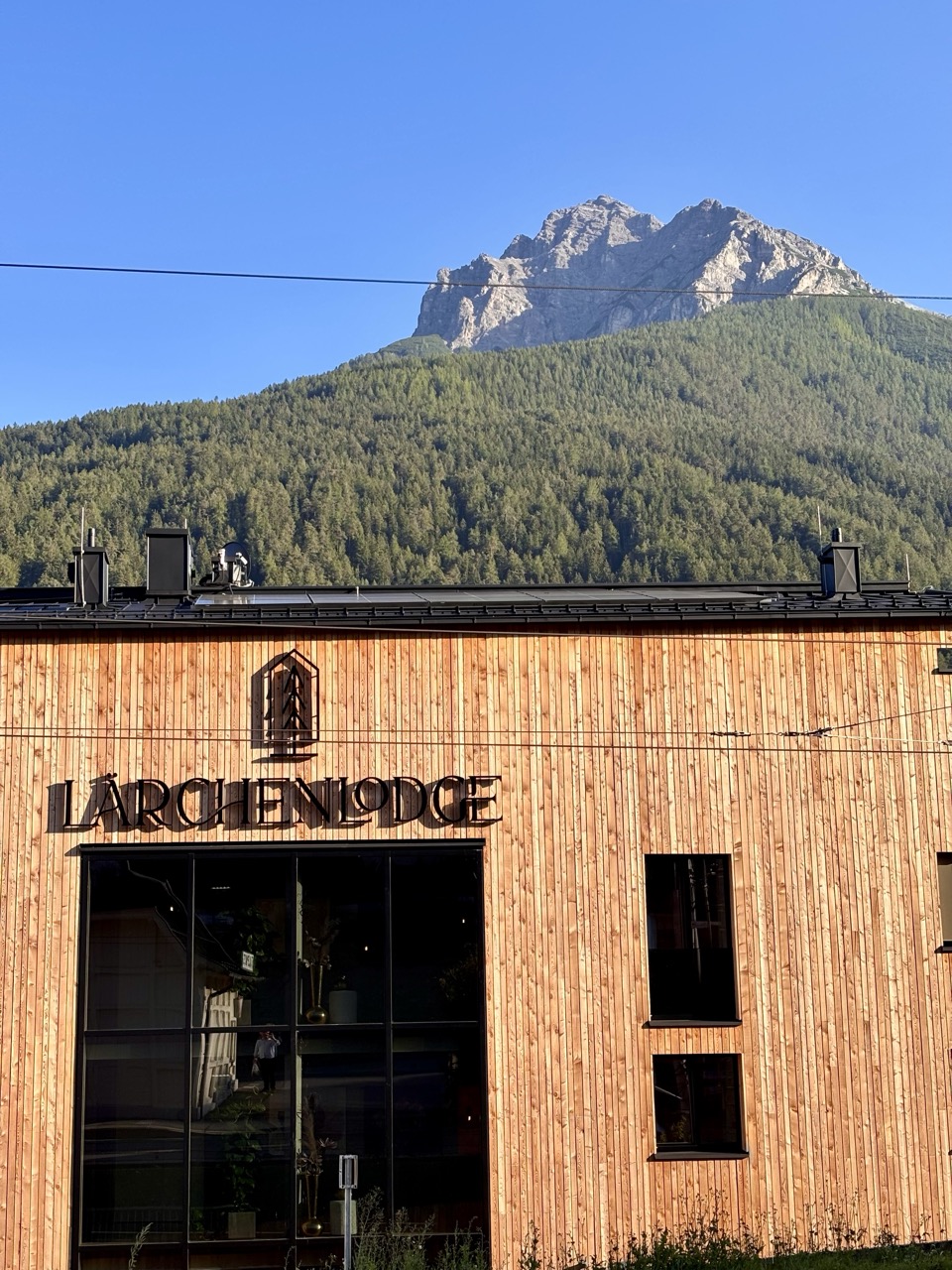
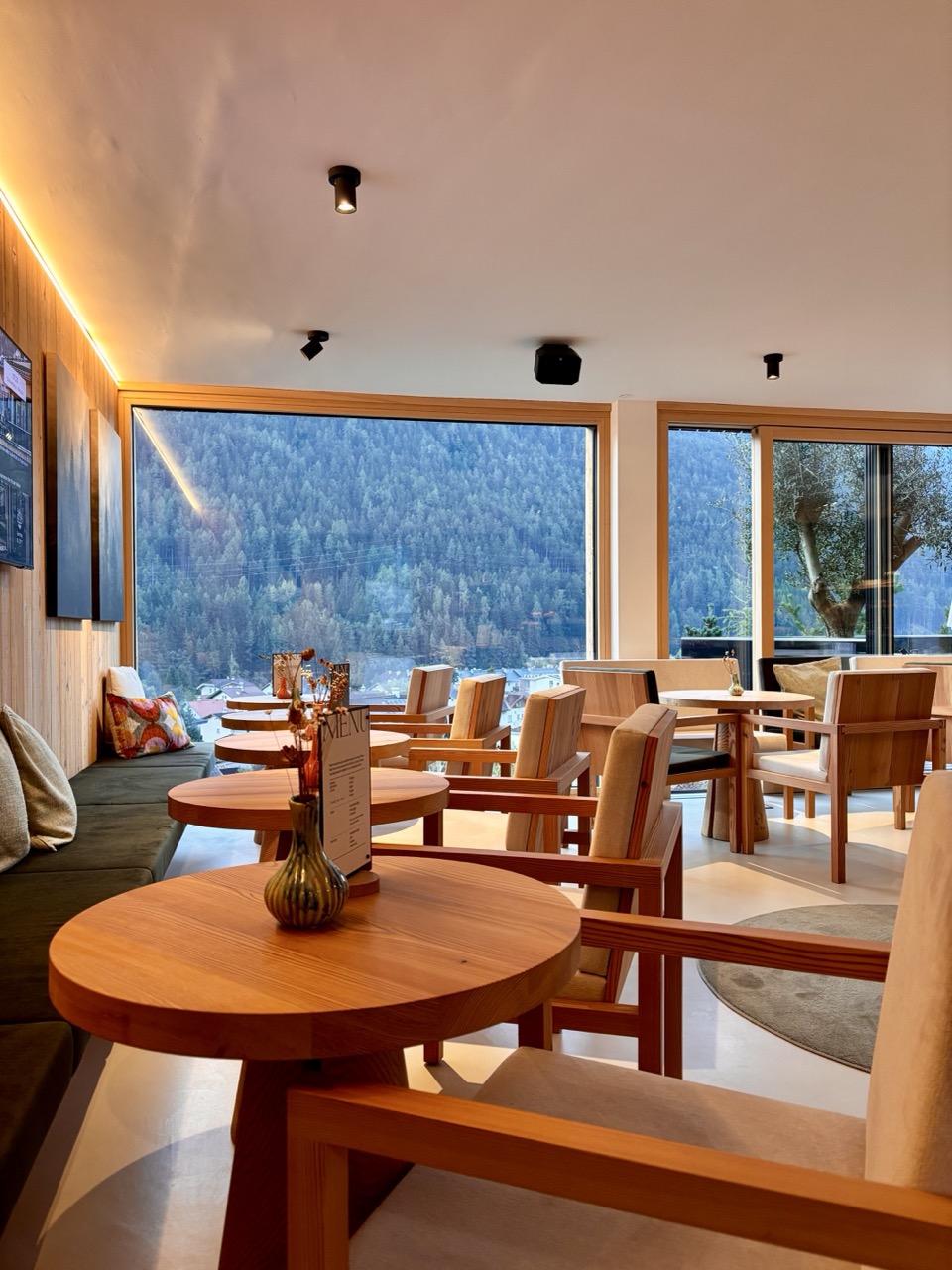
The Alps have no shortage of traditional visual references. Heavy timber, pitched roofs, rustic furniture and decorative motifs have long communicated the familiar idea of a mountain retreat. Lärchenlodge takes a different direction. Its architecture is contemporary, with clean lines, expansive glazing and a restrained material palette. Rather than reconstructing a traditional Alpine interior, it interprets the region through the qualities of its materials: the warmth of larch, the changing character of natural light and the relationship between the building and the surrounding mountains. The result avoids the need to explain its location through decoration. Large windows bring the landscape into the living spaces, while the wood provides warmth and continuity. The architecture does not compete with the mountains, nor does it attempt to disappear into them, it establishes a quieter relationship between the two. This is where the project becomes interesting beyond its immediate destination.
Contemporary regional architecture is at its strongest when it does not confuse local identity with historical imitation. A building can belong to its surroundings without looking as though it was constructed in another century. For international travellers, that distinction matters. The appeal of an Alpine retreat is not necessarily the promise of stepping into an idealised past, it can be the opportunity to experience a very contemporary way of living in a landscape whose character remains unmistakable.
Thirteen apartments, rather than a conventional hotel experience
Lärchenlodge is organised around 13 apartments, giving the property a more residential character than a conventional full-service hotel. Each apartment combines natural materials with the practical independence of a private mountain home. Depending on the accommodation, guests have access to a fully equipped kitchen, a balcony or loggia, panoramic windows and handmade wooden furniture. This format changes the rhythm of a stay. There is space to prepare breakfast without following a restaurant schedule, return from the mountains directly to a private living area, or spend an evening indoors without feeling that the hotel expects participation in a larger programme of activities. For couples, families and travellers staying for several nights, that independence can be more valuable than a long list of services.
It also reflects a broader development in luxury travel: the growing appeal of properties that combine the design and standards of hospitality with the autonomy of a private residence. The distinction is not simply between a hotel room and an apartment, it is between being accommodated somewhere and having a place in which to establish a temporary routine. At Lärchenlodge, the architecture supports the latter. The apartment becomes the centre of the experience, while the surrounding landscape supplies the reasons to leave it.
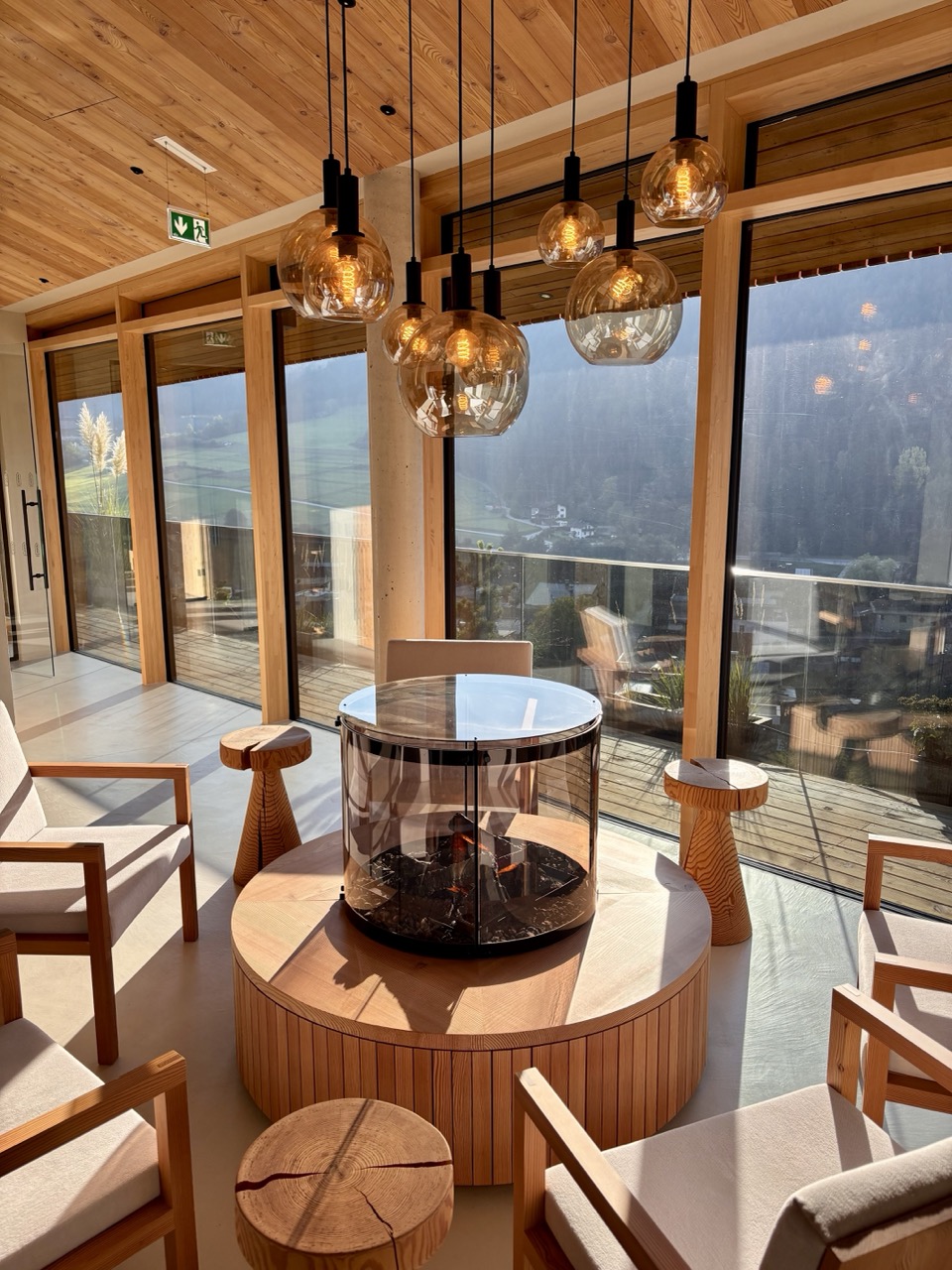
At the top of the building, LärchenSpa introduces another dimension to the property. The wellness area includes a panoramic sauna, a bio sauna and a heated rooftop whirlpool, with views towards the Stubai mountains, including the Serles, Elfer and Kalkkögel peaks and the Stubai Glacier. Rooftop wellness has become a familiar feature of premium Alpine hospitality. Its appeal is easy to understand: warmth, water and mountain scenery create an immediate contrast between the protected interior and the elements outside. But the experience at Lärchenlodge is consistent with the wider architectural approach. The spa is wrapped in larch, maintaining the material continuity of the building, while its elevated position makes the landscape an integral part of the experience. The view is not merely an attractive backdrop to a wellness facility, it changes the relationship between the guest and the setting.
The value of craftsmanship that does not announce itself
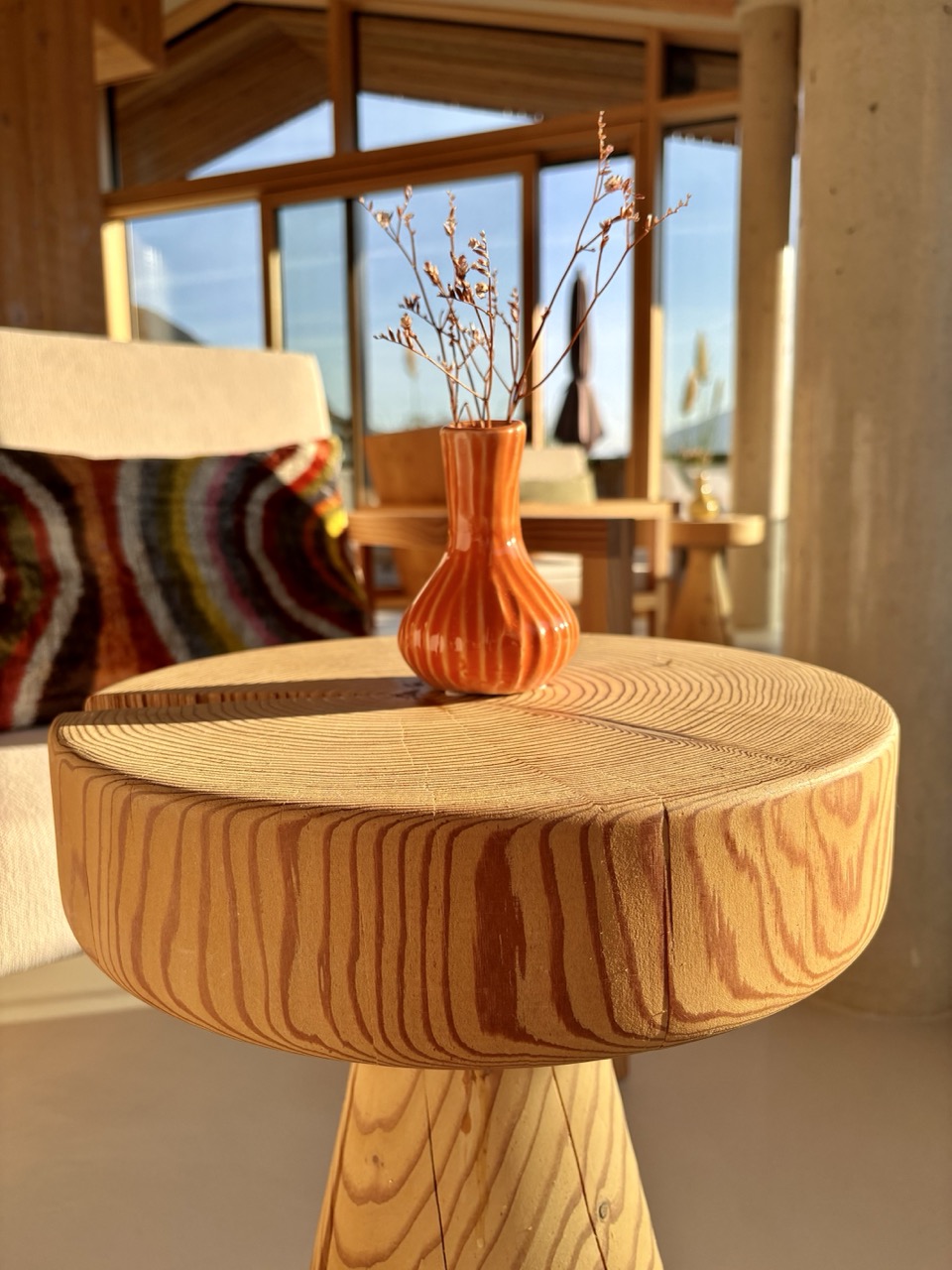
Handmade furniture is often presented as a luxury in its own right. In reality, the phrase can describe very different things, from highly individual pieces made by master craftsmen to products manufactured in larger quantities with limited hand-finishing. At Lärchenlodge, the significance lies in the connection between the timber and the people who shaped it. The larch was not selected after the building had been designed. Its journey from the family forest to a local sawmill and then to a South Tyrolean carpentry workshop forms part of the project’s underlying logic. This creates a relationship between material and object that is difficult to reproduce simply by purchasing expensive furniture. It also introduces an element of time. The forest existed before the property, the timber had to be processed, and the furniture had to be made. The finished interior is the result of a sequence of decisions and skills rather than a single act of decoration. That does not automatically make every locally produced object superior to an industrially manufactured alternative. But it does give the project a degree of material continuity that is increasingly valuable in a global hospitality market. When the story behind an interior is real, the design does not need to rely on decorative gestures to appear authentic.
Sustainability without turning it into a spectacle
Sustainability has become a central part of the language of luxury hospitality, but its meaning varies considerably from one property to another. For some hotels, it is communicated through certifications, technical systems and measurable environmental targets. For others, it appears in the selection of materials, the organisation of operations or the relationship with local suppliers.
Questions of energy consumption, construction impacts, maintenance, forest management and long-term resource use remain important. Nevertheless, the principle is compelling: the origin of a material can be part of the design decision rather than an afterthought. The same philosophy extends into smaller operational details. The property does not automatically provide disposable spa slippers, instead encouraging guests to bring their own. Neither decision should be mistaken for a complete sustainability strategy. Together, however, they suggest an approach in which certain choices are integrated into the way the property functions rather than presented as an additional experience for guests to consume. For a hotel, that can be a more convincing starting point than turning sustainability into a decorative theme.
A different measure of Alpine luxury
The architecture, the accommodation format, the materials and the wellness spaces all support the same idea of Alpine living: contemporary, independent and closely connected to its surroundings. For international travellers, the appeal extends beyond the Stubai Valley. It speaks to a broader question facing luxury hospitality: how can a property establish a genuine identity in a market where sophisticated design, premium amenities and natural materials are increasingly expected?
One answer is to begin with something that cannot be selected from a catalogue: a specific relationship with a place. At Lärchenlodge, that relationship starts with a family forest and continues through the hands of the people who transform its timber into a place to stay. The finished building is modern, but its story begins long before the first guest arrives. And perhaps that is the more interesting definition of contemporary Alpine luxury. Not the attempt to recreate the mountains indoors, nor the accumulation of amenities intended to make a stay feel exceptional, but the ability to build something new without severing its connection to where it came from. Before there was a hotel, there was a forest. The architecture simply gave that story somewhere to live.
*In Cooperation with Lärchenlodge Apartments and Spa/Sponsored Article
