
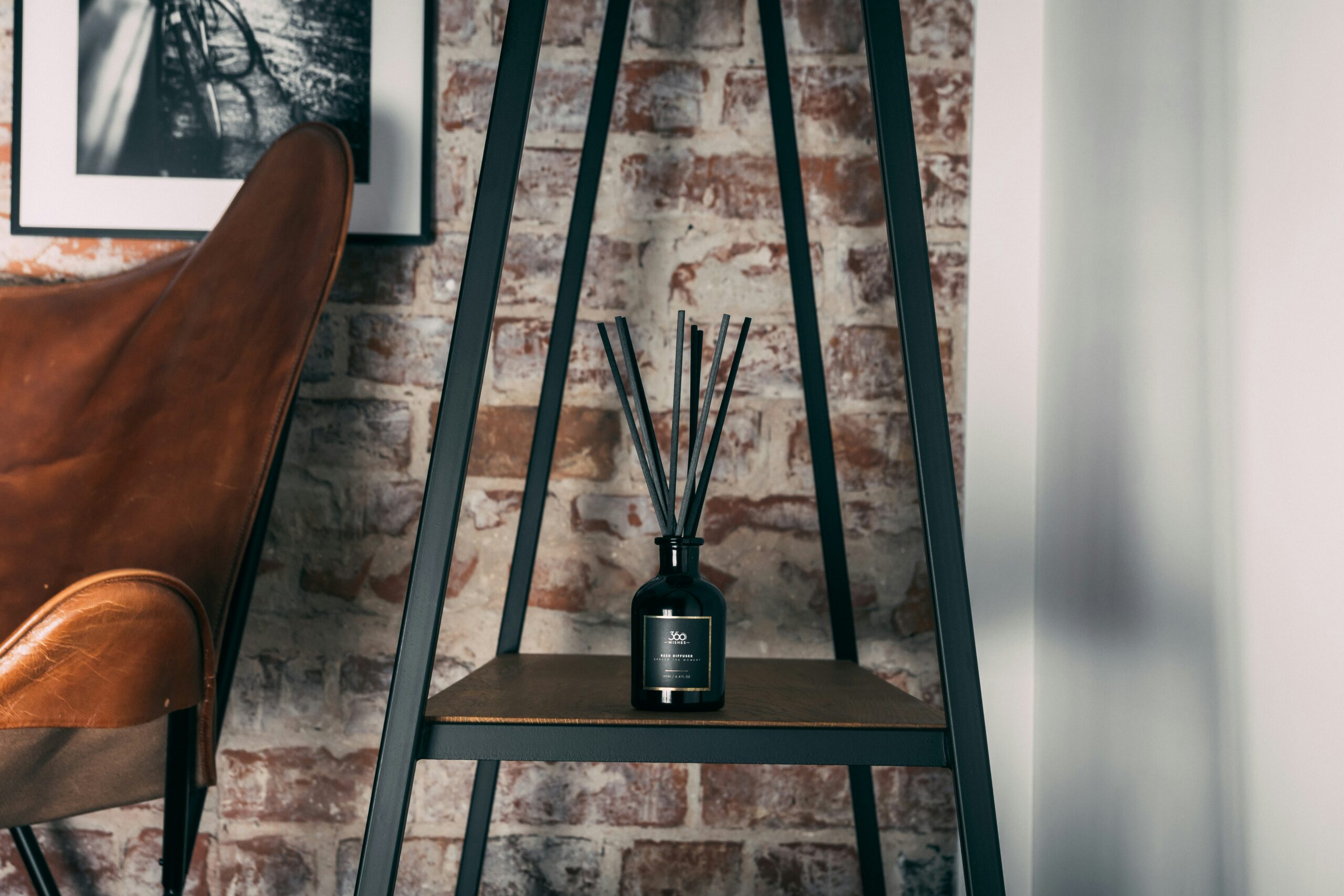
Luxury hotels have spent decades learning how to control what guests see. Architecture, lighting, materials, flowers, tableware, uniforms, artwork. Every detail is considered because the physical environment communicates before anyone says a word. There is another element, considerably less visible, that has become just as deliberate. Scent.
Walk into the right hotel and you may notice it immediately. Not as perfume in the conventional sense, and not as an obvious air freshener, but as something more difficult to identify. A particular warmth in the lobby. Cedar, fig, jasmine, incense, citrus. Perhaps something slightly smoky or mineral. You may not consciously register it, but your memory does. That is precisely the point.
The Hotel You Remember Without Knowing Why
Luxury hospitality has become increasingly sophisticated about sensory design. The reason is partly neurological. Smell has an unusually direct relationship with the areas of the brain involved in emotion and memory. A familiar scent can bring back a place, a person or a particular period of life with remarkable speed. A photograph requires interpretation, a scent can bypass it.
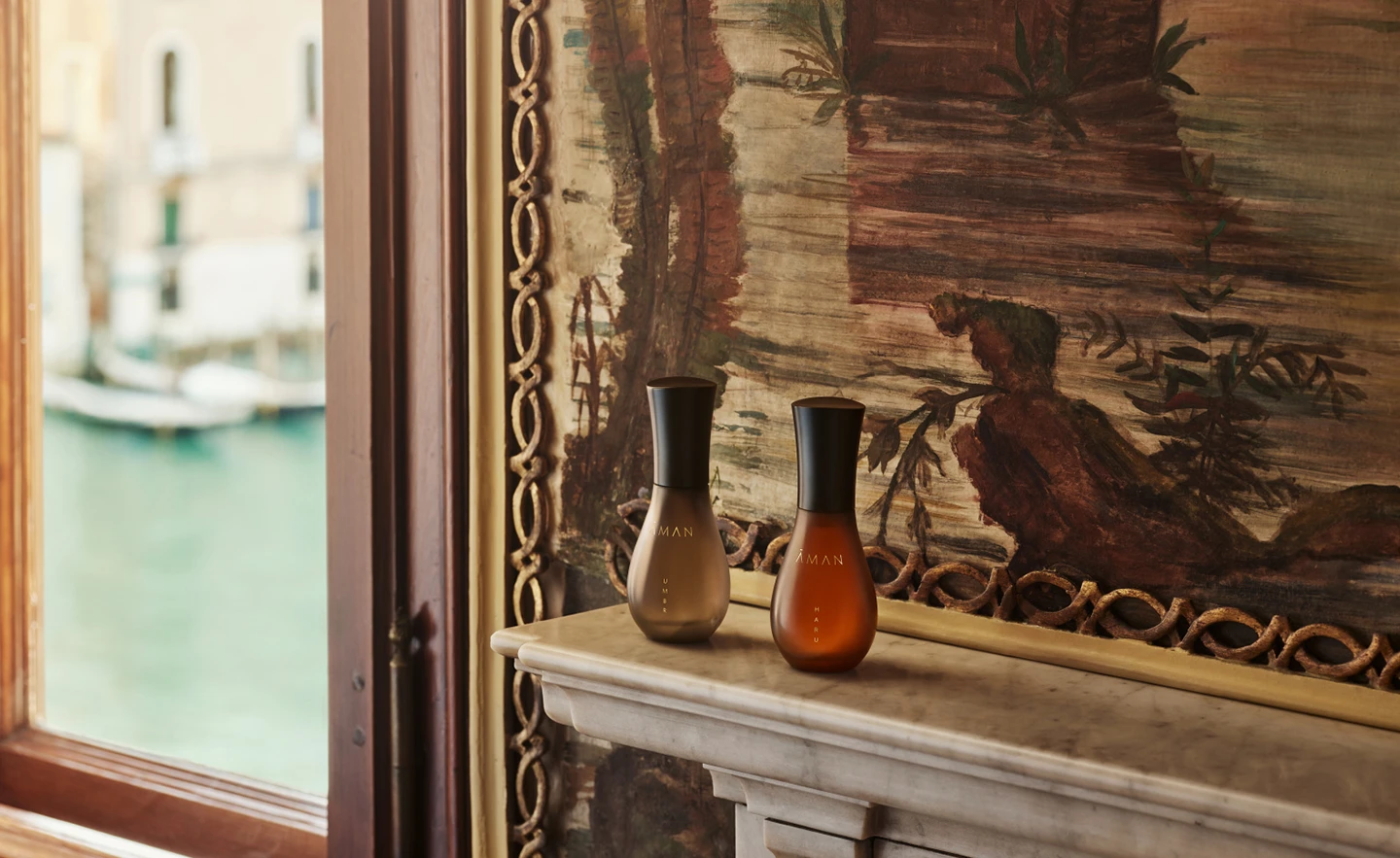
Aman has built an unusually deliberate philosophy around this idea. Its Fine Fragrance collection was created around individual Aman destinations, with scents intended to evoke the characteristics and memories associated with them. At Aman Tokyo, for example, hinoki is used in bath rituals and products, connecting the experience to the forests and traditions of Japan. Aman describes scent as part of the way its destinations are remembered. This is not simply merchandising. It is brand architecture through the senses.
From Signature Scent to Sense of Place
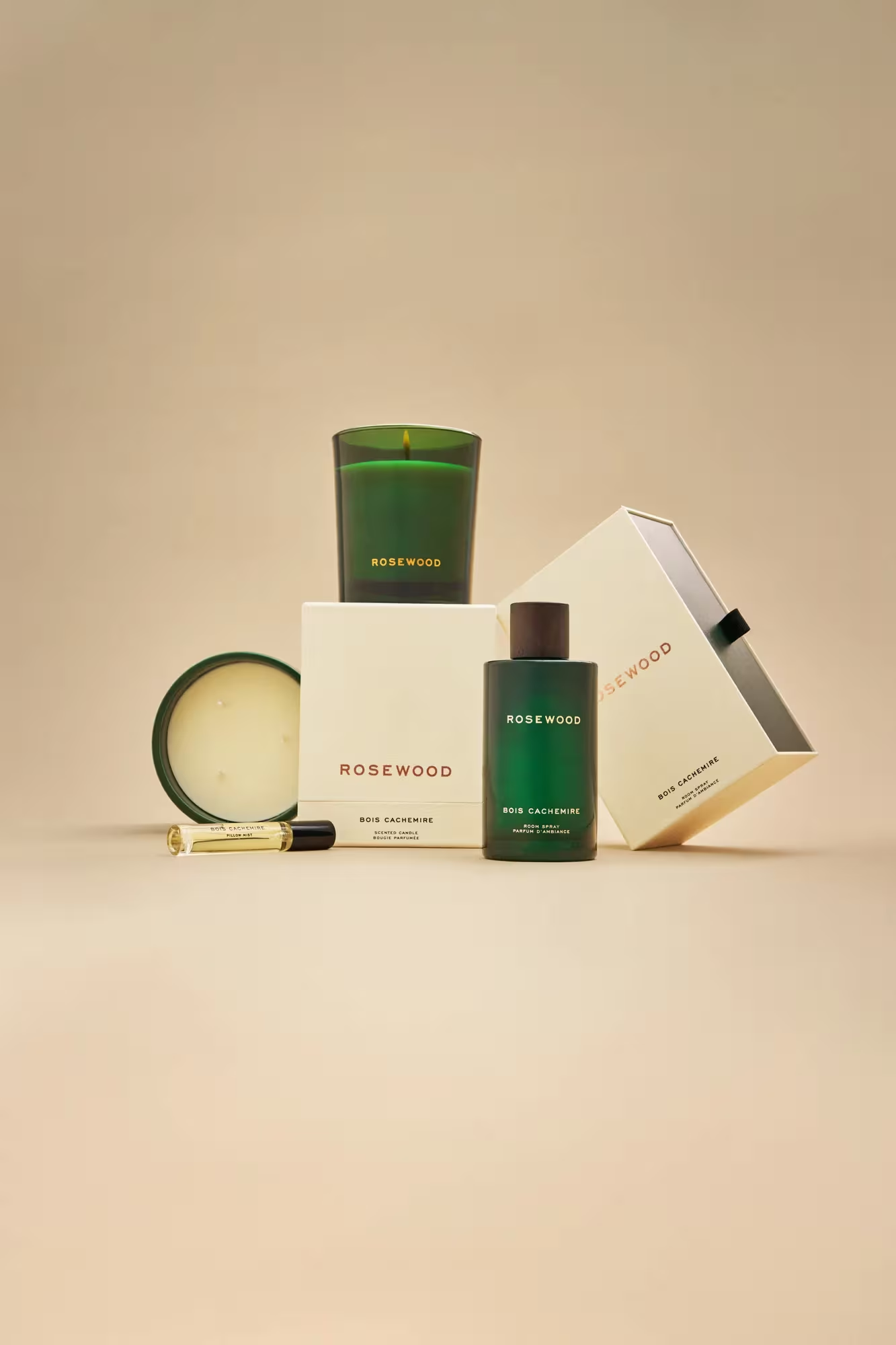
Rosewood approaches the idea from a different direction. The group’s philosophy has long centred on a “sense of place”, and its more recent fragrance work extends that idea beyond the physical property. Its Bois Cachemire fragrance, created with L’OBJET, draws on the idea of historic journeys between East and West, with references to the Silk Road, Southeast Asia, the Levant and the Mediterranean. The resulting scent is available not only as a fragrance, but also as candles, room spray and pillow mist designed to extend the memory of the hotel beyond the stay itself. The implication is interesting. The hotel is no longer simply a place where a fragrance exists, the fragrance becomes another way of owning the memory of the place.
Why Ritz-Carlton Thinks About Scent
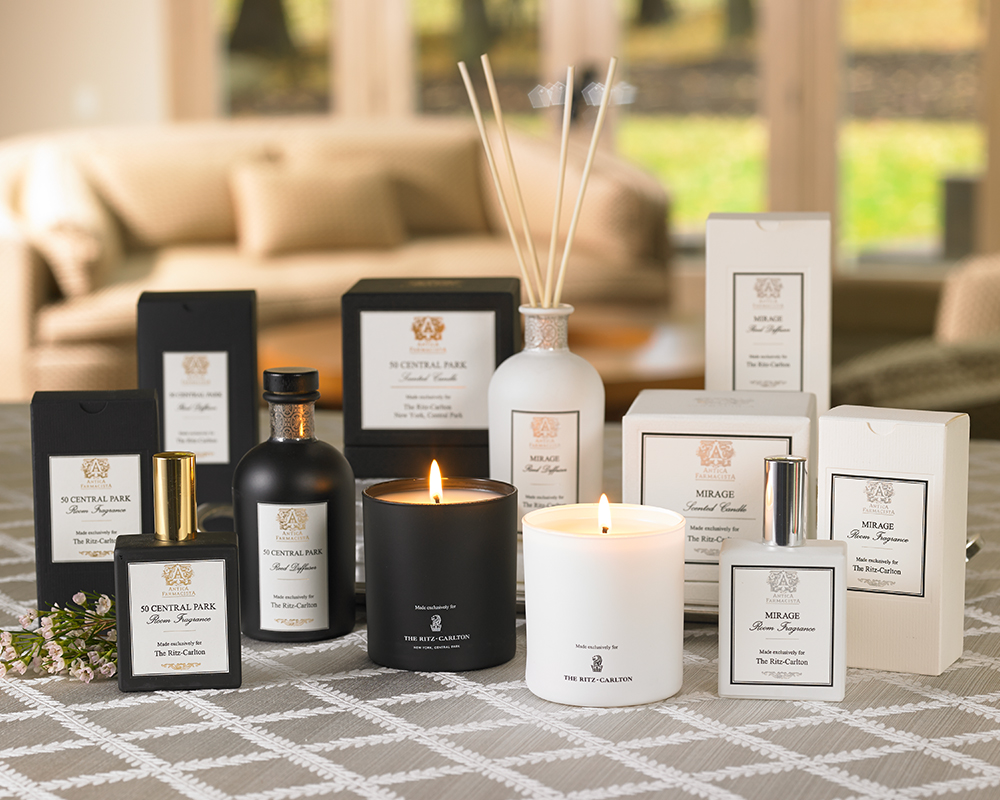
The Ritz-Carlton has taken a similarly deliberate approach. The brand works with different perfumeries to create distinctive scents across its properties. Its collaboration with Diptyque, for example, includes Philosykos, a fragrance associated with the memory of a Greek summer. At The Ritz-Carlton, Portland, the property’s bespoke room scent was created with Antica Farmacista and inspired by the Pacific Northwest, using notes associated with alpine forest, woods, herbs and rose. The important distinction is that these scents are not necessarily trying to make a hotel smell “expensive”. That would be the wrong objective. They are trying to make it recognisable.
Luxury Is Becoming More Multi-Sensory
For years, hotel design competed largely through visual language. Marble became shorthand for luxury. Then came increasingly elaborate interiors, dramatic lighting and Instagram-friendly architecture. But visual luxury has become crowded. A beautifully designed lobby is no longer unusual. Scent offers something different because it is intimate. It does not ask for attention, it enters the experience almost unnoticed. This makes it particularly compatible with the direction luxury hospitality has taken in recent years: less display, more atmosphere. The best scent in a hotel may be the one a guest barely notices while staying there, but immediately recognises six months later.
The Economics of Memory
There is also a commercial logic behind this. A hotel stay is temporary, but the memory of it does not have to be. This is why luxury hospitality increasingly extends into objects that can travel home with the guest: candles, room sprays, pillow mists, bath products and perfumes. Aman sells fragrances inspired by its destinations. Rosewood offers its signature scents as objects for the home. These products transform an ephemeral stay into something repeatable. The guest is no longer simply remembering the hotel, the hotel has entered the guest’s home. That is a remarkably effective form of brand loyalty because it does not depend on a logo. It depends on recognition.
The Risk of Making Luxury Smell Like Luxury
There is, however, an important distinction. Signature scent can be sophisticated, and over-scenting is not. A hotel that fills every corridor with an aggressive fragrance may achieve the opposite of what it intended. The experience becomes artificial, intrusive and difficult to escape. This is where restraint matters. The most convincing hotel scent should feel as though it belongs to the building. A coastal property might draw on salt, citrus, herbs or Mediterranean woods. A mountain hotel may find its language in pine, cedar, smoke or earth. An urban property may require something entirely different. The scent should not announce itself, it should complete the room.
The Next Frontier Is Local
This may be particularly relevant for luxury hospitality in the Adriatic. The region already possesses an extraordinary natural olfactory vocabulary. Wild rosemary, pine forests, lavender, sage, cypress, fig leaves, olive wood, sea salt, citrus. There is no need to manufacture an artificial idea of Mediterranean luxury when the landscape already provides one. The more interesting question for Adriatic hotels is whether they can translate that landscape into a sophisticated and restrained olfactory identity without falling into the predictable language of “Mediterranean” fragrance. A serious property in Istria should not necessarily smell like a generic coastal resort. Neither should a Dalmatian island hotel. The opportunity lies in specificity. The smell of a particular place, rather than the smell of “summer”.
When a Hotel Becomes a Memory
The strongest luxury brands understand that their real product is rarely the physical object. Aman does not simply sell a room. Rosewood does not simply sell a bed for the night. The Ritz-Carlton does not simply sell accommodation. They are selling a feeling associated with a particular standard of living, service and place. Scent is unusually powerful because it can compress all of that into something almost invisible. Years after a stay, a trace of jasmine, cedar, fig or incense can unexpectedly return a guest to a particular lobby, a particular morning, a particular city. No photograph is required, no itinerary needs to be consulted. The memory arrives on its own. And perhaps that is why scent has become such a serious part of contemporary luxury hospitality. The most sophisticated hotels are no longer designing only what guests see, they are designing what guests will remember.
Photos: unsplash.com/aman.com/rosewoodhotels.com/ritzcarltonshops.cn
