
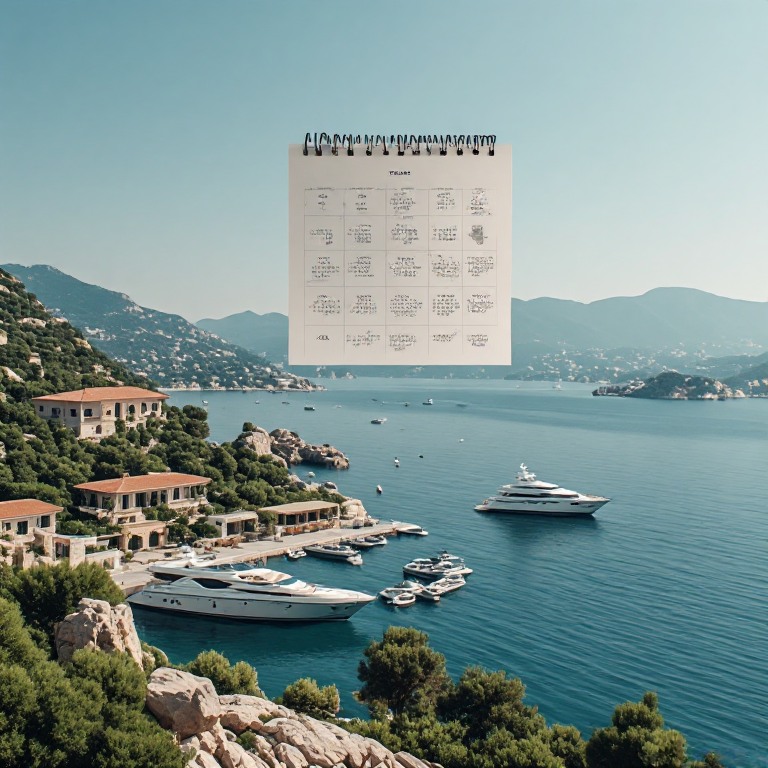
For decades, luxury hospitality followed a familiar calendar. Winter was for the Alps, summer was for the Mediterranean. The world’s most sought-after destinations competed for a few concentrated weeks of demand, structuring their business models around predictable peaks and quieter off-seasons. That calendar is becoming less relevant. Not because wealthy travelers are traveling less, but because they are traveling differently. The biggest change in luxury today is not where people go. It is when and how they choose to live across multiple places. For globally mobile wealth, the traditional travel season is gradually transforming into a constant state of movement.
Wealth Is No Longer Seasonal
The classic luxury traveler planned vacations around work schedules and school breaks. Today’s internationally mobile families often work with a different model. Entrepreneurs run businesses remotely across continents. Family offices manage investments in multiple locations. Executives split their year between residences instead of countries. Children increasingly attend international schools with more flexible schedules, while private aviation has greatly reduced the hassle normally linked to long-distance travel. The outcome is a lifestyle where geography is fluid. A villa in Tuscany, an apartment in London, a chalet in Gstaad, and a yacht in the Adriatic are no longer just destinations. They are parts of a distributed life. Travel has become a residency in motion.
Predictability Is Replacing Seasonality
This change is reshaping luxury economics. Historically, value focused on narrow seasonal windows. Hotels, marinas, and restaurants relied on short bursts of high demand, accepting lower usage during the rest of the year. More and more, investors are looking for something different. Steady occupancy has become more valuable than record-breaking peaks.
A property that operates consistently for ten months often creates more long-term value than one that depends on six remarkable summer weeks. Stable demand supports staffing, service quality, maintenance planning, and investment confidence. For experienced operators, resilience is taking the place of seasonality as the key metric.
The Adriatic
Few regions show this change more clearly than the Adriatic. For generations, the coastline has been linked to the busy months of July and August. Marinas filled quickly. Island restaurants operated at full capacity. Luxury villas made their highest rates during a relatively short period before the pace dropped significantly. That model still exists, but it is no longer enough.
As Croatia, Montenegro, and Slovenia continue attracting globally mobile wealth, the expectation shifts from seasonal greatness to year-round capability. The question is no longer whether the Adriatic can provide an exceptional summer. The question is whether it can support a sophisticated lifestyle in October, February, or April. Increasingly, that answer will determine competitiveness.
Infrastructure Becomes the Competitive Advantage
Extending a luxury season is not mainly a marketing challenge. It is an infrastructure issue. Reliable international connectivity, access to premium healthcare, wellness facilities functioning year-round, restaurants that remain open beyond the tourist season, marinas capable of supporting permanent yacht operations, concierge services that operate with the same efficiency in November as they do in July. These factors do not often make headlines. Yet combined, they determine whether a destination becomes a place people merely visit or somewhere they choose to make part of their lives.
Family Offices Are Changing the Equation
Perhaps the clearest sign of this shift comes from family offices. More and more, travel choices are not planned around holidays. They are organized around portfolios. Property purchases, philanthropic commitments, educational planning, business meetings, and lifestyle considerations now overlap geographically. Movement follows opportunity instead of vacation schedules. For destinations, this creates a different type of visitor. Less transient, more engaged. More likely to return repeatedly, build local relationships, and gradually integrate into the regional economy. The line between guest and temporary resident begins to fade.
Who Benefits?
The beneficiaries are unlikely to be those relying on short-term volume. Instead, the advantage shifts to operators able to provide continuity. Marinas become year-round operational bases rather than seasonal parking lots. Luxury villas transform into functional residences instead of holiday rentals. Wellness providers shift from leisure activities to parts of daily life. Concierge businesses evolve into permanent coordinators rather than occasional service providers. In this environment, consistency becomes a luxury in itself.
Beyond the Calendar
The traditional luxury season is not disappearing. It is losing its power. Summer will continue to attract demand, just as winter will still define the major alpine destinations. But increasingly, these periods serve as moments within a much larger rhythm rather than the rhythm itself. For the Adriatic, this presents both an opportunity and a challenge. Its natural advantages have never been limited to eight weeks of sunshine.
The question is whether its infrastructure, services, and long-term vision can evolve quickly enough to match the changing behavior of those who no longer organize their lives around seasons. Because the future of luxury may not belong to destinations that are special for just a few weeks each year. It may belong to those that remain essential throughout all twelve months.
