
For much of the past decade, high-end travel focused on accumulation. People sought more destinations, more references, and more experiences crammed into shorter timeframes. Luxury often showed itself through movement. This involved a carefully planned sequence of arrivals and departures that indicated access rather than continuity. This year, this trend is starting to shift.
Among wealthy travelers, a different approach is emerging. It’s not about withdrawing; it’s about consolidating. Instead of fragmented trips, many experienced travelers are opting for fewer places, longer stays, and returning to familiar locales more frequently. FOMO is no longer a driving force. In fact, it has become a source of fatigue.
From Accumulation to Calibration
This shift is subtle but significant. Travel once served as a way to expand social and cultural horizons. Now, it is increasingly seen through the lens of efficiency and psychological benefit. The focus is no longer on how much can be seen in one season but rather on how little is needed to feel truly restored, connected, and effective. This change is particularly noticeable among entrepreneurs, family office heads, and others whose professional lives already involve heavy cognitive demands and geographic spread. For this group, novelty has less appeal. Carefully chosen familiarity holds more value than constant new discoveries. As a result, the trend of “multi-destination summers” is fading. Instead, there’s a focus on anchored locations.
The Rise of Anchored Places
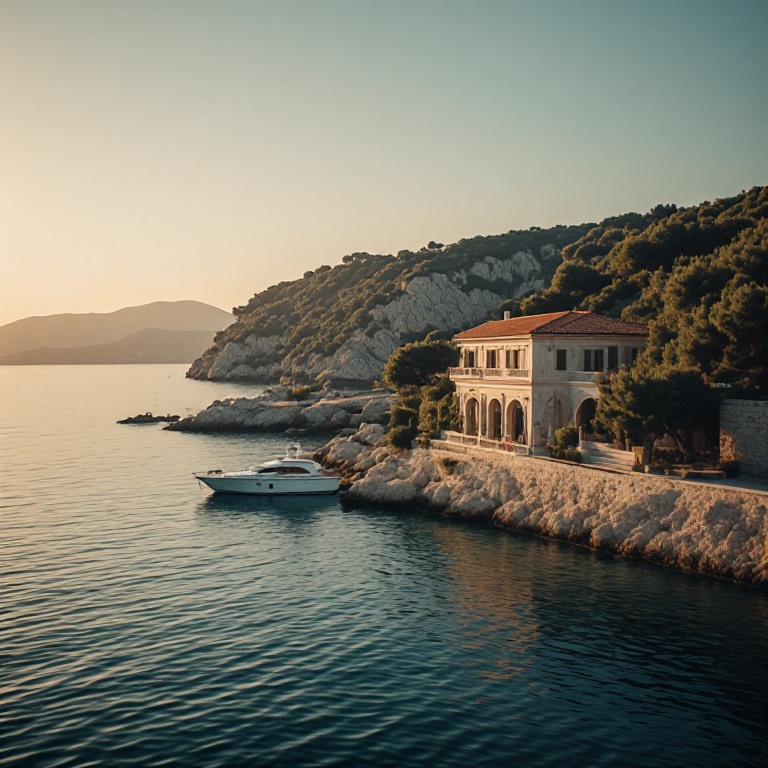
Some regions are benefiting more from this trend. It’s not because they offer more but because they allow for repetition without the risk of burnout. The Adriatic is one such region. Unlike bustling luxury spots that thrive on density and spectacle, the Adriatic thrives on a more fragmented approach. Its coastline is irregular, its islands create natural separations, and its seasonal rhythm is varied and unique. This setup makes it ideal for longer stays and repeated visits.
In practical terms, once a traveler establishes a base, like a villa or a preferred set of restaurants, the urge to constantly explore fades. The environment becomes self-sustaining. In Croatia, this is already evident in several coastal areas where high-end visitors return to the same small locations year after year, refining their experiences rather than seeking new ones. What is happening is not traditional tourism but a growing sense of territorial familiarity.
Why Less Movement Becomes More Valuable
The decline of FOMO among wealthy travelers doesn’t stem from a lack of interest. It comes from saturation. Constant exposure to new luxury environments creates a problem: new experiences become harder to tell apart. This leads to diminished emotional contrast and a weaker psychological benefit from movement. Longer stays help solve this issue by adding depth. When time is spent in one place, relationships form, not just with the location but with people, routines, and systems. Service becomes anticipatory instead of transactional, familiarity reduces cognitive strainand even logistics become part of a stable routine rather than a recurring chore. In this context, repetition is not a limitation; it is refinement.
The Adriatic’s strength lies in its ability to support repetition without becoming monotonous. A single season can include multiple islands, coastal towns, and inland experiences, all within a short distance. Yet, unlike other crowded Mediterranean spots, the region has enough variety to avoid becoming one-dimensional. This makes it particularly suited for what can be termed a “repetition economy” in travel, where value arises not from constant novelty but from deepening connections within a limited set of environments.
Under this model, places like Split, Šibenik, and certain island clusters do not just serve as one-off destinations; they become parts of a recurring presence. This approach also applies to marina facilities, private villa networks, and hospitality services that operate year after year for the same clientele.
Croatia’s Position in the Shift
For Croatia, this behavioral change among wealthy travelers is more significant than it seems at first. Traditionally, the region thrived on peak-season visibility, with high demand concentrated in summer months. That model still matters, but it’s no longer the only growth opportunity. More crucially, there is a gradual rise in repeat, long-stay guests who act less like visitors and more like temporary residents. This distinction is important. Visitors consume a destination, but residents contribute to its development. As visits grow longer, expectations shift towards stability: consistent service, discreet infrastructure, reliable logistics, and integrated lifestyle support. Hospitality evolves from isolated transactions to a cohesive ecosystem.
Who Gains From the End of FOMO
The beneficiaries of this shift aren’t always the most visible operators. They are those who appreciate continuity. Villa owners who design for returning guests rather than one-time rentals, restaurants that build recognition over constant change, yacht operators who focus on familiar routes instead of aggressive repositioning, concierge services that provide ongoing support, not just event-driven help. On the other hand, environments based only on novelty risk losing their appeal among this group.
A Quiet Reversal
What is happening does not imply a rejection of luxury travel but rather a redefinition of its purpose. Movement is no longer automatically seen as valuable. In many cases, it is now being weighed against the benefits of stability. The most discerning travelers are not traveling less; they are traveling differently, with more intention, fewer interruptions, and a greater focus on continuity rather than just visibility. The Adriatic fits into this shift not because it is new, but because it allows for repetition without fatigue.
In a world that has spent years pushing for more, the choice to embrace less and fully engage with it may become one of the most understated demonstrations of luxury.
