
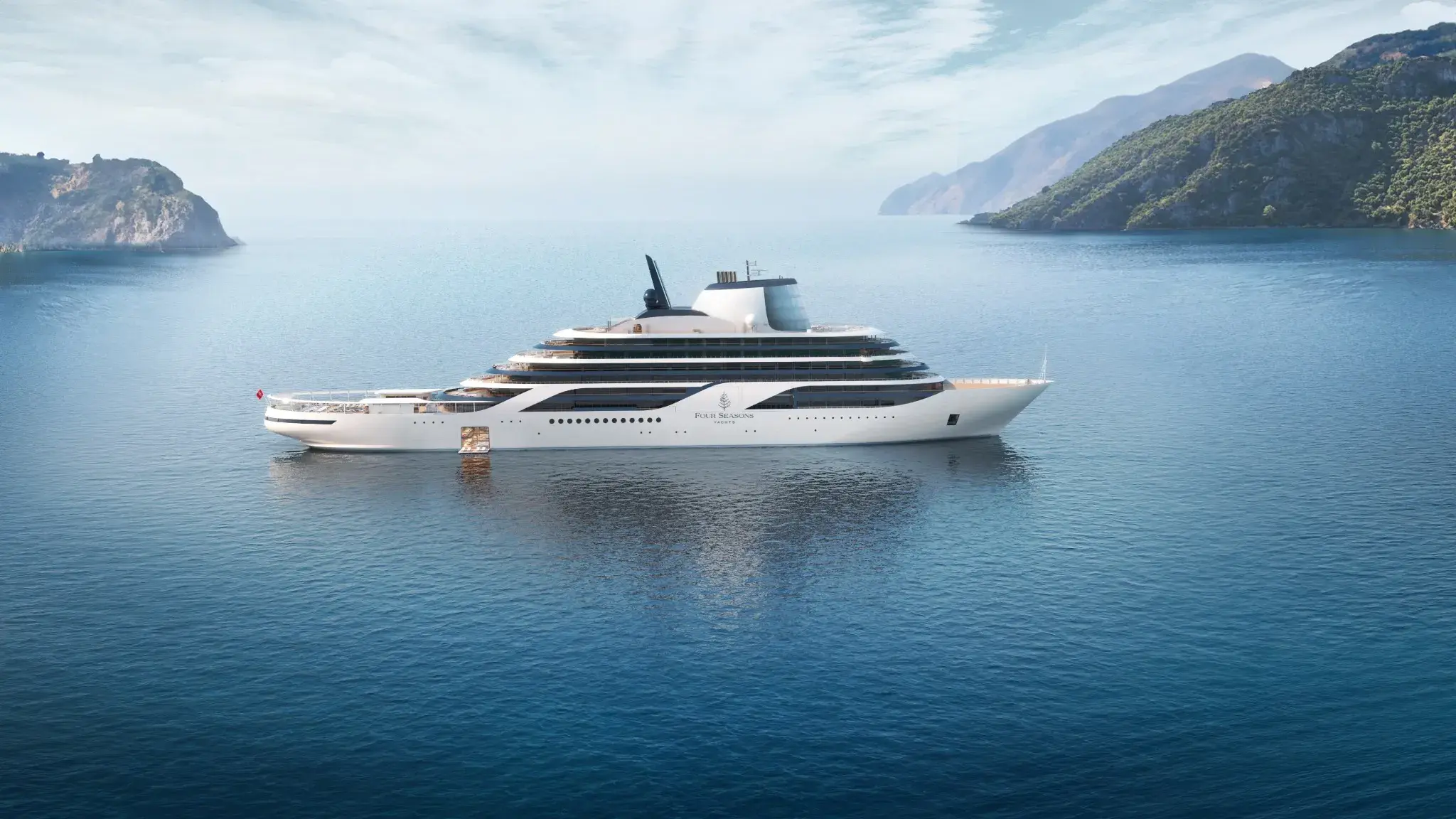
Luxury hospitality rarely states its goals directly. Instead, it shows them through investments, route choices, and long-term commitments. This is why Four Seasons Yachts’ arrival in the Adriatic is more than just another luxury travel story.
The key point is not that wealthy travelers will now arrive on a much-anticipated yacht. The real significance is that one of the world’s premier luxury brands has officially included the Adriatic in its Mediterranean vision.
For decades, this region had a unique role in global luxury travel. People admired it if they knew it well, but it was often seen as a stop on the way to other places rather than a destination by itself. The Adriatic was where yacht owners escaped crowded summer routes, and where seasoned travelers arrived after visiting Saint-Tropez, not as a substitute. That difference is crucial.
The inclusion of ports like Šibenik, Vodice, Opatija, and parts of the Dalmatian coast in the first Four Seasons Yachts Mediterranean itineraries signals a subtle but significant shift. The Adriatic is no longer just an alternative to established luxury coasts. It is increasingly viewed as part of the same conversation. For Croatia, this represents a validation that goes beyond tourism numbers.
Luxury ecosystems grow through accumulation, not just of visitors but also of credibility.
When brands like Four Seasons invest their clientele, reputation, and operational standards in a region, they shape how investors, family offices, property owners, developers, and hospitality operators perceive it. This influence often operates indirectly but is rarely insignificant.
A guest who first experiences the Adriatic through a Four Seasons itinerary is not a typical mass-market tourist. They often belong to a group of travelers used to private jets, branded residences, family office advice, and multi-generational wealth management. In other words, the arrival of luxury hospitality often precedes luxury investment. The immediate winners are not necessarily hotels. In fact, some of the biggest opportunities could come from outside traditional hospitality.
The luxury real estate sector stands to benefit greatly. As global exposure increases, waterfront properties, historic villas, and serviced residences can be more easily integrated into an international luxury market. Buyers who once focused on the French Riviera, Tuscany, or parts of the Balearic Islands may start looking at the Adriatic from a new perspective.
The same goes for dining. The restaurants most likely to gain will not necessarily be the largest or most advertised. They will be those able to function internationally while maintaining a strong local identity. Discerning travelers increasingly want authenticity without giving up quality. Establishments that grasp this balance will naturally fit into the region’s luxury image.
The nautical sector is also well-prepared
The Adriatic already has one of Europe’s most appealing cruising environments. Hundreds of islands, short distances between sailing spots, protected waters, and a maritime culture built over centuries create advantages that infrastructure spending alone cannot replicate.
What Four Seasons brings is not geography but storytelling. And storytelling often translates into value. However, not everyone benefits automatically. The biggest risk for local operators is getting attention without proper positioning.
As international interest rises, many businesses will assume that demand alone will suffice. History shows otherwise. Among the Mediterranean’s most successful destinations, the winners are rarely those that draw the most visitors. Instead, they are the ones that create a clear luxury identity. The Adriatic must make a choice. It can chase volume or pursue relevance. These two goals do not always align.
For concierge services, private villa operators, yacht brokers, wellness providers, and specialized travel advisors, this moment could be particularly important. Global luxury travelers increasingly look for integrated experiences rather than separate transactions. Accommodation, dining, transport, privacy, wellness, and local access are becoming part of a single system. Those operators who can connect these elements are likely to benefit much more than those providing isolated services. This may be the most crucial outcome of Four Seasons Yachts entering the Adriatic. It’s not that there will just be more wealthy travelers. It’s that the region is beginning to be assessed by a new set of standards.
The world’s most discerning travelers are no longer questioning the Adriatic’s beauty. That has been agreed upon long ago. The current question is whether the region can turn recognition into infrastructure, attention into positioning, and seasonal popularity into lasting relevance. The arrival of Four Seasons Yachts does not provide answers. It simply makes these questions impossible to overlook.
