
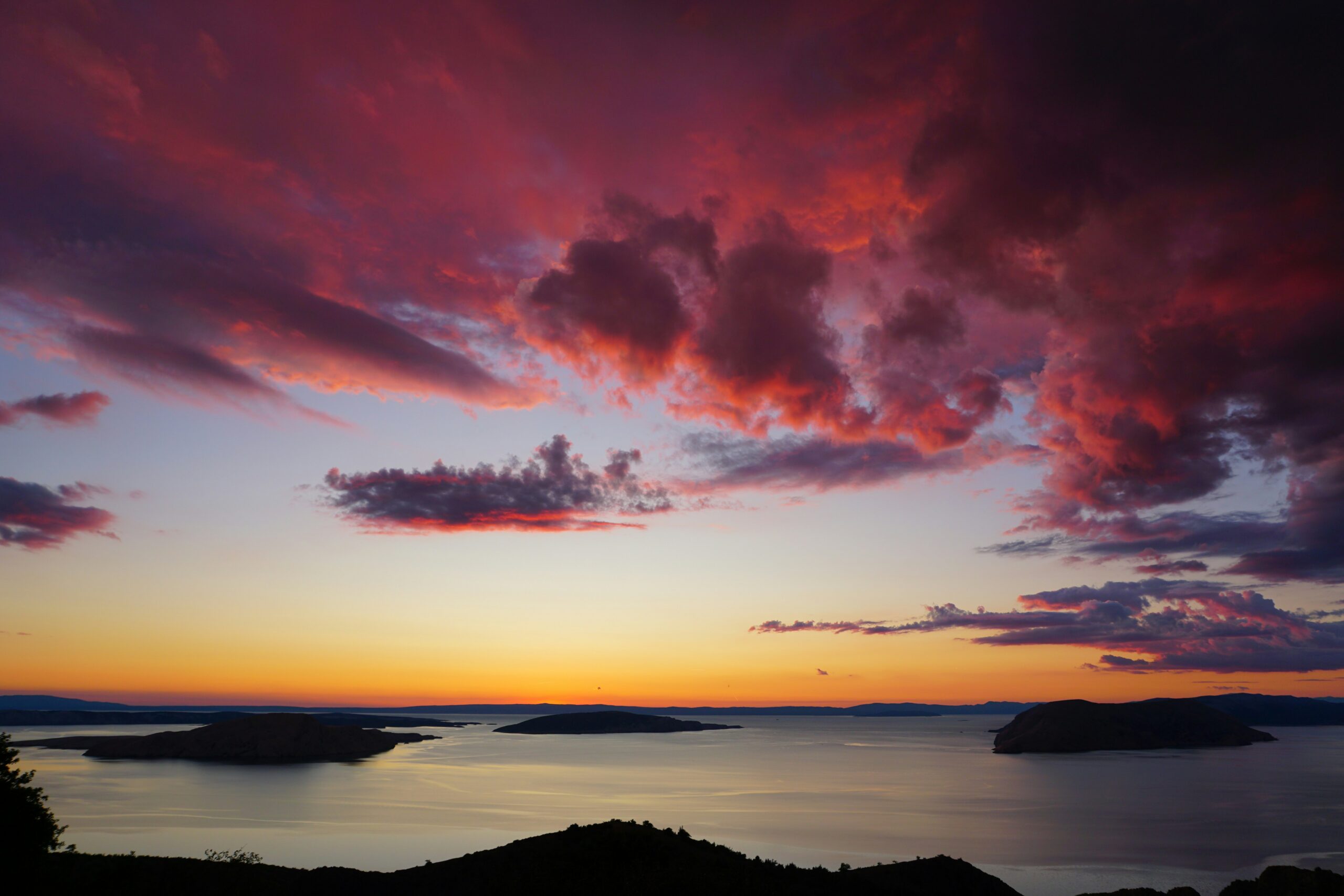
A new word entered the Cambridge Dictionary this year: hushpitality. It refers to something that the world’s most powerful people are now paying huge amounts for – privacy. Once a basic expectation, it has become the ultimate status symbol. In our world filled with digital visibility, the ability to disappear has turned into a rare luxury.
Luxury hotels around the globe are trying to keep up. The fastest-growing group of luxury travelers is willing to pay more for less: less noise, less stimulation, less congestion. Architects are redesigning resorts to focus on sound isolation. Wellness programs are being revamped to emphasize stillness instead of spectacle. An entirely new vocabulary has emerged: quietcations, dead zoning, silent floors, all to describe what people are desperately seeking. The Adriatic has no need for such terminology. It simply offers the experience itself.
What the World Is Buying?
People like Jeff Bezos are known for private island stays that eliminate public exposure entirely. Executives have shown interest in “silent-floor” hotel concepts – spaces designed for sound isolation, limited access, and subtle service. According to Hilton’s global research, the top reason to travel for leisure in 2026 is “to rest and recharge,” mentioned by 56% of participants. They also want to spend time in nature, improve mental health, and find genuine “me time.”
Hotels and villas are creating quieter arrivals, peaceful spaces, and low-key technologies. Guests are welcomed by name but are not constantly interrupted. Staff interactions remain discreet and intuitive. Resorts are crafting pockets of silence, shaded courtyards, calm pools, and nature-filled areas that act as small sanctuaries. The hospitality industry is striving to create something that, in some parts of the Adriatic, exists as the natural state of a Tuesday afternoon in September.
What the Adriatic Has Always Known?
On a smaller island in the Croatian archipelago, reachable only by a ferry that runs twice daily, you’ll find a main village without cars, nightclubs, or cocktail bars with DJs. There is a konoba, a family tavern, that opens and closes at the owner’s discretion. Stone paths lead to coves where the water is so clear that you can see the bottom at a depth of twelve meters. Fig trees dot the landscape, and old men play cards in the shade, surrounded by a quiet that demands little from you.
No one built this. No one designed it. It is simply the result of a small community on a limestone island being largely left alone for centuries. This is what hushpitality costs thousands of dollars a night to replicate elsewhere. Here, it’s just part of daily life.
The Architecture of Quiet
The Adriatic’s built environment is a masterclass in the principles that the world’s most expensive wellness architects are now trying to achieve, almost by accident. Two-foot-thick stone walls keep interiors cool and acoustically perfect in summer. Narrow streets eliminate vehicle noise. Courtyards center on a well or tree, creating enclosed silence amid busy towns. Windows are directed away from the afternoon sun. Terraces face the sea and welcome the maestral, the summer wind that reliably arrives every afternoon, noted by the ancient Greeks as divine.
True luxury has shifted from being seen to feeling at ease, where service is intuitive, privacy is respected, and a sense of place replaces excess. Each of these qualities was part of Adriatic vernacular architecture long before luxury hospitality became a concept.
The Romans recognized this. Diocletian chose not to build his palace in Rome, the busiest, most crowded city of his time. Instead, he constructed it on a promontory overlooking a small bay on the Dalmatian coast, facing the islands. He chose to retire there and refused to leave. When asked to return to power, he allegedly said he preferred growing cabbages.
The emperor discovered what every visitor to this coastline finds: something hard to define but instantly recognizable when you’re within it.
The New Pilgrim
The trend is clear: luxury is now about accessing less, not more, and achieving exclusivity. Hushpitality reflects a cultural shift away from the public display of wealth typical of social media. The Adriatic attracts travelers who understand this instinctively. They are not here for crowded Dubrovnik in August, full of cruise ships and Game of Thrones tours. They come for Pelješac peninsula in early October when things quiet down and locals reclaim the waterfront. They seek a rented stone house on an island with no airport. They appreciate the silence of an Adriatic morning before anyone is awake, just water, swallows, and the faint sound of a church bell marking a time that feels genuinely ancient.
The trend aligns with a wider move in luxury travel toward well-being-focused escapes and digital balance, where travelers intentionally disconnect from technology and embrace slower rhythms influenced by nature. The Adriatic’s slower pace isn’t a wellness offering; it’s a geological and cultural reality. The limestone takes centuries to form. The olive trees grow slowly. The wine ages in dark cellars beneath the stone houses. Everything here unfolds on a timescale that makes a week feel long and a summer feel like a lifetime.
The Irony at the Heart of the Trend
There is something worth contemplating in all of this. The world’s most sophisticated travelers are paying premium prices for hushpitality retreats, which now cost between four and six thousand dollars for a fully immersive, all-inclusive experience, just to find what has always been available, largely unadvertised and modestly priced, along this coastline for decades.
The Adriatic did not market itself. It did not hire a creative director. It did not create a manifesto about intentional living or design a wellness program or patent the idea of sitting quietly by the sea. It simply remained true to itself, slowly and stubbornly. Magnificently indifferent to whatever the world decided to name it. That, perhaps, is the most essential aspect of hushpitality.
